Best Live Casino Online Australia: How It Works
 Available in US
See how dealers, cameras, software providers, and table formats shape live casino play across Australian-facing platforms.
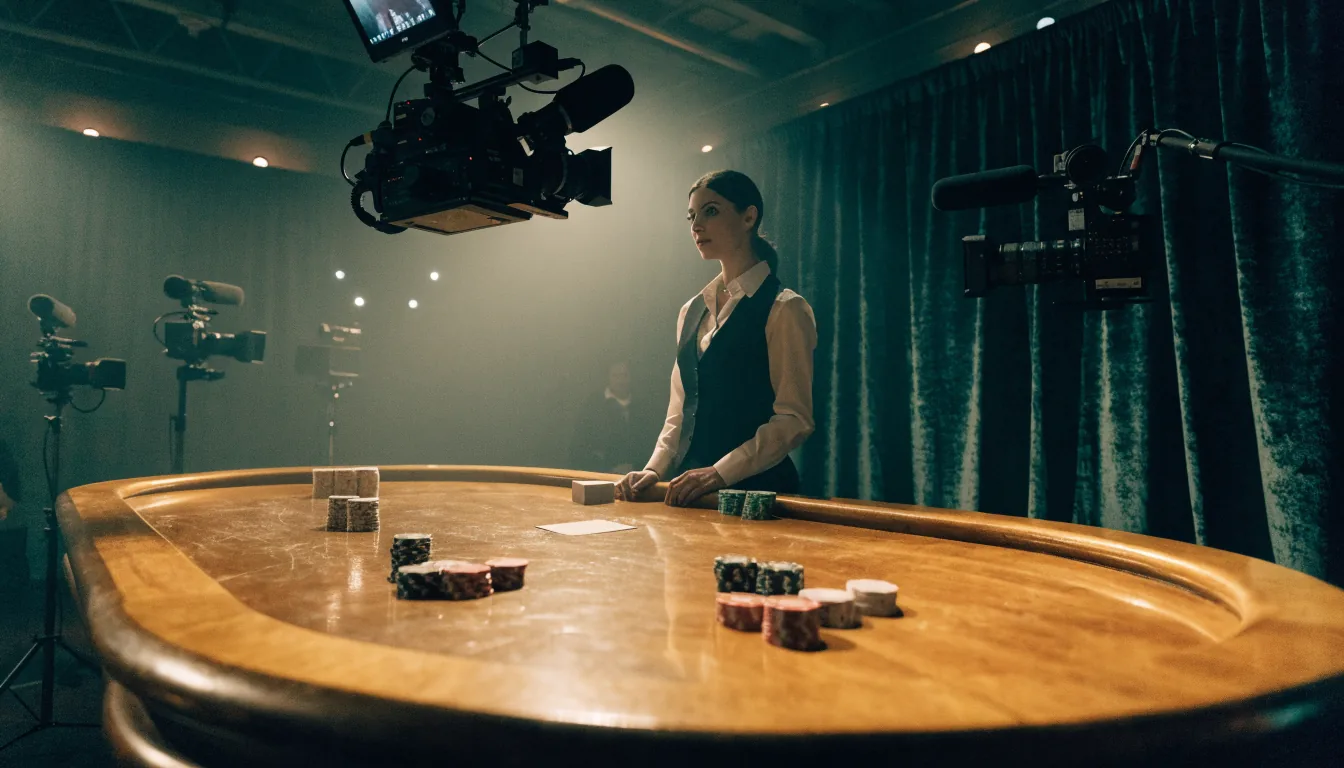
Table of Contents
- Live Casino in Australia: The Spectacle Behind the Screen
- The Software That Turns a Table into a Broadcast
- Providers, APIs, and the Curious Case of Live Casino Poker
- The Games People Gather Around
- Live Roulette: The Old Wheel in a New Room
- What a Live Dealer Actually Changes
- Why “Live Casino USA” Keeps Appearing in Australian Searches
- Playing Live Casino Across Borders: Malaysia, Canada, and the Search for “Play”
- Live Casino Apps: Convenience with a Small Print Problem
- Live Casino AU: A Label, Not a Licence
Live Casino in Australia: The Spectacle Behind the Screen
A live casino is built around a simple transformation: the casino leaves the illustrated interface and appears as a room. There is a table, a dealer, cameras, lighting, and a stream carrying the scene to a screen. The cards or wheel are handled in real time rather than represented by an animated sequence. What looks like a website becomes a small broadcast studio with gambling attached.
That distinction explains the enduring appeal of live casino online play. Automated games are efficient, private, and almost silent. Their symbols arrive according to software, while the surrounding experience is compressed into buttons, reels, and balance figures. A live table restores the visible rituals: the dealer greets the room, waits for betting to close, handles the result, and moves the session forward. The outcome remains a matter of chance, but the route towards it has a human rhythm.
A table designed for the camera
The modern live table is not simply a traditional casino table placed in front of a webcam. It is arranged as a piece of television. Several cameras may show the dealer, the playing surface, or a closer view of the action. Graphics identify the table and display betting information. A digital interface allows remote participants to select wagers, follow the countdown, and watch the result appear on the physical table.
This shortlist brings together notable options for exploring live casino play in Australia in 2026. Use the individual verdicts to quickly identify the operators whose published offers, licensing details, or payment information match your priorities.
License: Curacao Gaming Control Board OGL/2023/176/0095 (Hollycorn N.V.) · Bonus: up to A$1,500 + 200 free spins across 3 deposits LuckyVibe is notable for its Curacao Gaming Control Board licence and a welcome offer of up to A$1,500 plus 200 free spins across 3 deposits.
License: Curacao eGaming Licence · Min. deposit: A$10 Rocket Play operates under a Curacao eGaming Licence and has a minimum deposit of A$10.
License: Curacao eGaming Licence · Min. deposit: A$10 Aussie Play operates under a Curacao eGaming Licence and has a minimum deposit of A$10.
License: Curacao, operated by Dama N.V. · Bonus: 325% up to 5.25 BTC + 250 free spins across 4 deposits 7Bit Casino is operated by Dama N.V. in Curacao and offers 325% up to 5.25 BTC plus 250 free spins across 4 deposits.
Bonus: 100% up to A$750 + 200 free spins, 35x wagering · Payout speed: crypto 30-120 minutes, fiat 24-72 hours · Min. deposit: A$30 MrPacho offers 100% up to A$750 plus 200 free spins, with 35x wagering. Its stated payout times are 30–120 minutes for crypto and 24–72 hours for fiat, with a minimum deposit of A$30.
License: Curacao – Antillephone N.V. (Versus Odds B.V.) · Bonus: up to EUR 2,000 across 5 deposits + 200 free spins · Min. deposit: EUR 20 Thor Casino is licensed in Curacao by Antillephone N.V. for Versus Odds B.V. Its offer provides up to EUR 2,000 across 5 deposits plus 200 free spins, with a minimum deposit of EUR 20.
License: Curacao eGaming OGL/2024/923/0383 (Antillephone N.V.) · Bonus: up to A$2,000 + 100 free spins across 2 deposits · Min. deposit: A$30 WinSpirit Casino holds a Curacao eGaming licence and offers up to A$2,000 plus 100 free spins across 2 deposits. The minimum deposit is A$30.
License: Curacao · Bonus: up to A$2,000 Golden Pokies is a Curacao-licensed operator with a bonus of up to A$2,000.
License: Curacao Gaming Control Board (TechSolutions Group N.V.) · Bonus: 100% up to A$250 + 100 free spins (1st deposit) Bizzo Casino is licensed by the Curacao Gaming Control Board through TechSolutions Group N.V. Its first-deposit offer is 100% up to A$250 plus 100 free spins.
License: Curacao Gaming Control Board · Bonus: up to A$5,000 + 400 free spins JustCasino operates under a Curacao Gaming Control Board licence and offers up to A$5,000 plus 400 free spins.
The dealer occupies the centre of this arrangement. Their work is partly procedural and partly performative: dealing, announcing, checking the table, and maintaining a pace that can be understood by people joining from different places. The studio is carefully controlled, yet the presentation is meant to feel less mechanical than a fully automated casino. A pause, a smile, or a brief exchange in the chat can make the room seem inhabited rather than merely rendered.
This is the small theatre of online casino live play. Not grand theatre. More television set than palace.
The social element matters because gambling has rarely been only about the wager. Physical casinos place people in a shared environment, even when they arrive separately and keep their attention on their own betting positions. Live streaming recreates part of that arrangement without reproducing the building itself. Participants may see other wagers, observe the table’s pace, and use a chat window where one is available. The room is shared, although the chairs are scattered across private homes.
That shared quality separates live online casino formats from the solitary feeling of many automated games. A punter can still play quietly, of course, but the surrounding signals are different. There is a person to watch, a table to follow, and a visible sequence of actions between placing a wager and receiving the result. The screen does not merely report what happened. It stages what is happening.
The Australian meaning of “live”
In Australia, the phrase “live casino” carries a legal shadow that should not be mistaken for decoration. The Interactive Gambling Act 2001 is the main law governing online gambling in Australia. Online casino services offered to Australian customers fall within the category of prohibited interactive gambling services. A polished studio, an Australian-facing label, or an inviting table does not turn that service into a locally licensed online casino.
That position creates an odd gap between language and status. “Live casino Australia” may describe the audience a page is addressing, the currency or terminology it uses, or the market an offshore operator is trying to attract. It does not establish that an Australian casino licence exists. No such domestic licence exists for online casino games.
The law is directed at providers rather than individual participants. Players are not prosecuted under the Interactive Gambling Act; enforcement targets the provider. That distinction is important, but it is not a certificate of safety, approval, or consumer protection. Legal exposure and practical risk are not the same thing, and a player still has to consider what protections are absent when a service operates beyond Australia’s licensing system.
The spectacle therefore has two layers. On screen, there is the carefully managed performance of the dealer and table. Behind it sits a less theatrical question: who is providing the service, from which jurisdiction, and under what rules? The visual confidence of a broadcast can make those questions easy to forget. It should not.
Why the format feels more immediate
Live casino play gains its immediacy from continuity. The dealer does not simply trigger a result; the dealer moves through a sequence that viewers can see. Betting opens, participants make their choices, betting closes, and the physical action follows. Even when the rules are familiar, the visible chain gives the session a beginning, middle, and end.
The live casino experience is a managed broadcast, combining a physical studio environment with a digital transaction system.
That structure also gives time a social texture. A player is not only watching numbers, symbols, or an animation resolve. They are watching a room wait together. The dealer’s announcements mark the tempo, while the interface translates the table into information that remote participants can use. The result is still generated within a controlled gambling system, but the experience feels less like pressing a switch and more like arriving late to an ongoing event.
The attraction is not necessarily sophistication. Sometimes it is simply presence. Automated games can be elegant, but they do not look back. A live dealer does, even when the glance is directed towards a camera and shared among many unseen rooms.
For that reason, the best live casino online experience is often described in terms of atmosphere rather than machinery. The table offers a sense of occasion: a person performing a familiar ritual, a broadcast carrying it elsewhere, and a group of remote viewers occupying the same moment. The format borrows from television, hospitality, and traditional gambling without belonging entirely to any of them.
It remains gambling, not a private club and not a harmless show. The studio may be bright, the dealer composed, and the interface reassuringly polished. None of that changes the underlying nature of the activity. The spectacle is real; so are the boundaries around it.
The Software That Turns a Table into a Broadcast
A live table may look simple on screen: a dealer, a layout, a few buttons and a stream that appears to run without friction. Behind that image sits a chain of software doing less glamorous work. It captures the studio feed, sends it through a platform, records every wager, updates the interface, and keeps the visual result tied to the correct digital account. The broadcast is the visible part. The accounting is the serious part.

From studio camera to player screen
Live casino software begins with the studio environment. Cameras send several views of the table to the platform, while production systems manage the dealer feed, close-ups, graphics and changes between scenes. A viewer may see one polished frame; the software is coordinating multiple sources at once.
That coordination matters because a live table is not merely video. The stream must sit beside an interactive betting panel. A punter selects a wager, the platform records it, the table closes betting, the dealer completes the action, and the result appears in the account history. The screen therefore has two personalities: television above, transaction system below.
A strong live casino solution keeps those personalities aligned. If the picture lags behind the betting panel, confidence disappears quickly. If the panel updates before the broadcast makes sense, the table feels less like a real room and more like an argument with a loading icon.
The platform layer
The platform is the middle ground between the studio and the operator’s site. It handles user sessions, game lobbies, balances, chat functions, table availability and the stream itself. It also determines how a live casino site behaves when several tables are open at once or when a connection weakens.
This is where the phrase live casino software provider becomes more useful than the vague label “online casino technology”. A provider may supply the studio feed, the game interface, the back-office tools, or a complete package. Some operators build a branded front end around that package. Others connect several suppliers and present them under one lobby. The result can look uniform to the punter even when different systems are working underneath.
Multiple camera angles showing the dealer and the playing surface.
A digital interface for placing wagers and following the countdown.
The coordination of video streaming, accounting, and real-time results.
The best live casino software is not necessarily the software with the most decoration. It is the software that makes ordinary actions legible: which table is open, whether betting is still available, what has been placed, and whether the result has settled. A dark interface with theatrical animations cannot compensate for unclear status messages.
Resolution is only half the picture
Streaming quality is often discussed as though sharpness were the whole matter. It is not. A clear picture can still be unpleasant if the motion breaks up, the audio arrives late, or the camera switches at the wrong moment. Live-casino systems must balance image quality against connection stability, particularly when a mobile network is carrying the feed.
Good software adjusts the stream without making the table vanish into a blur. It keeps the dealer’s actions readable, the layout visible and the timing credible. Audio deserves equal attention. The click of equipment, the dealer’s announcement and the closing of a betting round all help establish sequence. Remove those cues and the table loses its rhythm.
The interface also has to survive ordinary distractions: a browser tab changing size, a player switching between portrait and landscape views, or a connection briefly faltering. A useful design does not punish every interruption with a frozen table and a mysterious error message.
What randomness means in the software
Not every casino product uses the same technical model. A live table is built around a physical event shown through a stream, while automated pokies rely on software-generated outcomes. That distinction should remain visible.
Online pokies and slot machines use the same reels, RTP and volatility, even though Australians generally say “pokies” where international markets may say “slots”. Each spin is independent, and the previous result has no bearing on the next outcome. RTP remains a long-term theoretical average, not a promise about one session.

For licensed Australian-facing platforms, independently audited random number generators are required. That requirement concerns products using random-number systems; it does not turn a streamed studio table into an automated game. Software still has to record wagers accurately and transmit results correctly, but the source of the event is different.
The interface can make both formats look equally glossy. Software is very good at smoothing over distinctions. It should not be allowed to erase them.
Free access and the missing transaction
A free live casino mode can be useful when it behaves as a demonstration rather than a disguised money route. It allows the stream, controls and table layout to be inspected without a real-money wager. The important question is what has been removed: no cash balance, no withdrawal promise and no financial settlement.
“Live casino online free” can therefore describe a viewing or practice environment, but it does not reproduce every condition of real-money play. The software may show the same table and interface while excluding account verification, payment processing and balance management. A free live casino is a rehearsal stage.
Regional labels complicate matters further. A table described with a Singapore-facing label may reflect branding, content or a platform’s audience settings. The software itself does not confer a local licence, and a polished interface is not evidence of regulatory approval. Technology travels more easily than legal permission. It always has.
The quiet test of a good system
A reliable platform leaves little to interpret. The stream, controls, balance and result should agree with one another. Tables should load without theatrical delay; buttons should show whether they are active; the history should reflect what happened rather than what the screen seemed to suggest.
Technical Components A live casino setup involves several layers:
- Studio cameras and production systems
- A platform handling user sessions and game lobbies
- An API connecting the supplier to the operator
That is the machinery behind the broadcast: cameras and servers, interfaces and audit trails, providers and platform connections. The dealer remains the most visible human element, but software determines whether the performance becomes a coherent gambling service or merely attractive video. Smoothness is not decoration. It is the evidence that the parts are speaking to one another.
Providers, APIs, and the Curious Case of Live Casino Poker
A live-casino table rarely belongs entirely to the website displaying it. The operator may provide the brand, account system, cashier and customer support, while a specialist supplier provides the studio, dealer feed, game logic and table management. Between the two sits an API: the quiet plumbing that lets separate systems behave as though they were one room.
That division matters. A polished casino front end does not necessarily mean that every table is produced in-house. It may be assembling a catalogue from several live casino providers, each with its own studios, presenters, table limits, languages and operating hours. The result is less like one casino than a building with rooms rented from different theatrical companies. The lobby is shared; the performances are not.
What an API provider actually supplies
A live casino API provider does more than send a video stream. Its connection may carry table availability, game states, bet acceptance, settlement messages, dealer actions and player balances between the supplier and the operator’s platform. The operator then places those functions inside its own account area, alongside other gambling products.
This is why a live casino integration can be visible without being conspicuous. A login may occur on the operator’s branded site, while the table itself is managed elsewhere. A player selects a seat, submits a wager and watches the result, but several systems may be checking that sequence in the background. If one connection fails, the fault may appear as a missing table, a delayed action or a game that refuses to load—not necessarily as a dramatic error message.

Providers also differ in how much control they give operators. Some offer a ready-made catalogue with standard presentation. Others support branded tables, selected studio environments or customised lobby arrangements. An operator choosing between them is not merely counting games. It is deciding how much of the room should feel local, how much should feel imported and how many separate technical relationships it is willing to maintain.
The operator’s catalogue is an arrangement
A live casino platform can therefore be understood as an agreement between identities. The website owns the relationship with the customer; the supplier owns much of the table experience; the API keeps the two in conversation. Live casino reviews that assess only the lobby may miss this division, while reviews concerned only with the supplier may overlook the operator’s account rules and presentation.
The distinction becomes useful when comparing mobile live casino access. A table can be supplied by the same provider on desktop and mobile, yet appear differently because the operator has integrated the feed into separate interfaces. The provider’s responsibility and the website’s responsibility overlap, but they are not identical.
The same caution applies to performance claims. A provider may publish information about game mathematics, but a headline figure is not a promise about one session. RTP, where relevant, is a long-term theoretical average, not a forecast of what an individual sitting will produce. For licensed Australian-facing platforms, random number generators must also be independently audited where they are used. A supplier relationship does not remove that obligation.
Why live casino poker is an awkward category
“Live casino poker” sounds straightforward until the table rules are examined. In one format, the house may be the opponent and the dealer controls the hand. In another, players may be competing against one another, with the platform supplying the room and dealing mechanism. Poker’s social language suggests a shared contest; casino poker often turns that contest into a bet against a fixed house outcome.
Legal Distinction Do not confuse the social atmosphere of live poker with the specific house-banked rules of casino poker. Ensure you understand whether you are competing against players or the house.
That difference affects the provider’s job. A supplier may need to manage seats, hand states, player actions, settlement logic and responsible handling of disconnected sessions. It is not simply a camera pointed at cards. The operator must then present the format clearly enough that a customer does not confuse a peer-to-peer table with a house-banked game. Confusion is a poor interface feature.
A live casino login may open the same branded lobby for roulette, blackjack and poker, but the underlying supplier arrangements can vary by table. The catalogue is therefore a negotiated map, not a single machine. That is the curious part: the most human-looking product on the screen may depend on the most bureaucratic chain behind it.
The Games People Gather Around
Live casino games are not one uniform family. They borrow their appeal from different traditions: the quiet arithmetic of baccarat, the ceremony of a wheel, the bluffing vocabulary of poker, and the cheerful noise of game-show formats. The table may be streamed from a studio, but the social mood changes with every set of rules.
Table games: rhythm before spectacle
Baccarat is among the most restrained live formats. Two hands are dealt, the outcome is compared, and the round ends quickly. There is little for a punter to manipulate, which is precisely the attraction for people who prefer a clean ritual to a crowded interface. The pace is brisk, with repeated cycles of anticipation and release.
Blackjack is more conversational in structure. Cards are dealt against a dealer hand, and decisions such as hitting or standing give the player a visible role in the round. That role does not turn the game into a contest of personality; the dealer still follows the table rules. It does, however, make the screen feel less like a result generator and more like a shared room.

Roulette has a different social grammar. Bets gather on a layout, the wheel turns, and attention narrows to one small object before widening again when the result lands. Its drama is public: everyone watches the same spin, even when their wagers are scattered across different parts of the layout. The wheel has no shortage of theatre.
Poker and its neighbouring formats
Live casino poker can mean several things, and the distinction matters. Some tables place players against a dealer, while others use a shared table structure in which the relationship between participants is more important. The pace may be slower than baccarat or roulette because cards, decisions, and reactions carry more weight.
That slower rhythm suits players who enjoy reading a room. A pause, a confident gesture, or a dealer’s announcement becomes part of the experience, although none of these turns chance into certainty. The performance surrounds the mathematics. It does not replace it.
Live casino game shows
Game-show tables are the extroverts of the category. They use presenters, branded sets, bonus rounds, and rules designed to make the result feel like an event rather than a quiet hand of cards. The appeal is less about mastering a compact betting layout and more about joining a broadcast with a visible host and a larger sense of occasion.
These formats can be easier to watch than to analyse. That is not an insult; television has always understood the value of suspense, music, and a well-timed pause. The danger is simply confusing presentation with improved probability. A lively room remains a room governed by its rules.
Summary
- Live casino games rely on a blend of human performance and software coordination.
- The experience differs significantly between streamed tables and automated pokies.
- Software stability and streaming quality are essential for a reliable session.
Where pokies fit
Live casino slot games are often used as a loose phrase, but a streamed dealer table and a pokie are fundamentally different experiences. A pokie is automated, with each spin independent of the previous one. RTP describes a long-term theoretical average, not the result of a particular session. Volatility also shapes the pattern: high-volatility pokies tend to pay less frequently in larger amounts, while low-volatility games tend to pay more frequently in smaller amounts.
That vocabulary helps explain the contrast. Tables create a sense of company through shared timing; pokies create repetition through independent spins. Some online pokies permit stakes from a few cents to hundreds of dollars per spin, but stake size does not alter the independence of outcomes. Different rooms. Different habits.
Live Roulette: The Old Wheel in a New Room
Roulette is the live casino’s most recognisable piece of theatre: a polished wheel, a bright betting layout, and a small crowd waiting for one ball to decide the mood. Its appeal is visual before it is mathematical. The wheel turns in public. Nothing is hidden behind a reel animation or reduced to a button marked “spin”.
A live roulette table usually presents the game through a streamed dealer-led setting, with the betting area displayed beside the wheel. Players select wagers on colours, numbers, groups of numbers, or combinations of these areas before betting closes. The arrangement is familiar because roulette has spent generations teaching people where to place hope.
Reading the roulette layout
The layout divides bets into two broad families. Inside bets sit around individual numbers or small numerical combinations. Outside bets cover wider groups, such as red or black, odd or even, or ranges of numbers. The first group offers narrower targets; the second creates a broader visual rhythm, with players often gathering around the simplest choices.

That distinction changes the character of a table. A number-focused round can feel quiet and private, even when the table is busy. An outside-bet round has more collective energy: several players may be watching the same colour, while the wheel remains entirely indifferent to the agreement.
Variants alter the wheel and the available structure, but the central ritual remains intact. The croupier announces the close of betting, releases the ball, and waits. Roulette is unusually good at making a short pause feel like an event.
What the result does—and does not—mean
Every spin is independent. The previous result has no bearing on the next outcome, so a run of black does not make red “due”, and a recently landed number does not become more or less likely because it appeared moments earlier. The table may remember the sequence on a display; the wheel does not.
This is where the live setting can encourage a charmingly human mistake. A dealer’s voice, the visible ball, and the shared chat make separate rounds feel connected. They are connected socially, not mathematically.
RTP, where published for a roulette game, is a long-term theoretical average rather than a promise about an individual session. It cannot predict what happens during one visit to a live roulette table. Licensed Australian-facing platforms, where applicable under their relevant regulatory arrangements, are required to use independently audited random number generators; that requirement belongs to regulated gaming systems generally and should not be confused with the physical wheel shown in a live broadcast.
The wheel remains the flagship image of live casino play because it combines ceremony with uncertainty. It gives the room a centre, the dealer a stage, and the punter a reason to watch one more turn. A remarkably old machine. Still excellent at suspense.
- Watch the dealer’s physical actions for transparency.
- Confirm the interface shows clear, real-time status messages.
- Use the live stream to understand the game’s rhythm.
- Mistake a professional broadcast for a local regulatory license.
- Assume a run of results in roulette makes a specific outcome “due.”
- Confuse a live dealer’s presence with direct control over the outcome.
What a Live Dealer Actually Changes
A live casino dealer changes the character of a game before changing its mechanics. The cards still follow the rules; the wheel still turns; the result is not persuaded by a smile, a greeting, or a perfectly timed pause. What changes is the human setting around the wager. An online casino with live dealers borrows the rituals of a physical table and compresses them into a broadcast: introductions, acknowledgements, hand signals, dealt cards, and the small choreography of waiting.
That choreography matters because gambling has never been only arithmetic. A table gives people a place to watch one another, even when the other people appear as usernames and coloured icons. The dealer becomes the host of that temporary room. A good presenter keeps the pace legible, explains a procedural moment, and prevents silence from feeling like a technical failure. The role is part croupier, part television presenter, and occasionally part traffic controller.
Presence, Not Influence
The dealer does not alter the underlying odds. In a properly operated environment, the outcome remains governed by the game’s rules and equipment rather than by personal charm or table conversation. For automated games, licensed Australian-facing platforms are required to use independently audited random number generators. A live table is a different format, but the same caution applies: human presence should not be confused with human control.
This is why the appeal of live dealer blackjack is not that the dealer can make a hand more favourable. It is the visible procedure that attracts attention. Cards are handled in public view, actions occur in sequence, and the table develops a rhythm. The dealer’s announcements turn a private screen into a small public performance.
The same quality appears in live casino Dragon Tiger, where the simplicity of the contest leaves more room for ceremony. The dealer displays the cards, marks the two sides, and gives the result a recognisable shape. With fewer decisions to explain, personality occupies more of the available space. Some players want exactly that: not a complicated lesson, but a table that feels inhabited.
Table Manners at a Distance
Etiquette survives the move online, though it becomes less formal. Players may respond through chat, acknowledge the dealer, or remain silent while watching. The dealer addresses the room rather than a single person, which keeps the table moving and avoids turning a game into a private conversation. Courtesy is functional here. It protects the pace and makes the shared setting feel less like a queue of isolated wagers.
A casino with live dealers therefore sells an experience of participation, not merely access to a result. Yet real-money play remains real-money play, however warm the lighting or polished the presentation. The Interactive Gambling Act 2001 is the main law governing online gambling in Australia, and its enforcement targets providers rather than players. The dealer’s friendly greeting does not change that legal boundary. Nor does it turn entertainment into protection.
The human face is valuable precisely because it makes the format feel social. It is not evidence that the table is safer, fairer, or legally available. A pleasant host is still a host.
Why “Live Casino USA” Keeps Appearing in Australian Searches
The label “USA” attached to a live casino does not necessarily describe where the player is located. It may refer to an American-themed table, a dealer presentation, a brand’s intended audience, or a catalogue arranged around familiar regional language. In other words, geography is sometimes part of the packaging rather than proof of access.
Regulatory Reality Attention An “AU” or “USA” label is often decorative branding and does not guarantee local licensing or consumer protection under Australian law.
That distinction matters in Australia. An American-facing live online casino and an Australian live casino are not interchangeable descriptions. A table streamed in an American style may still be hosted by an offshore operator, under rules and protections belonging to another jurisdiction. The flag is decorative; the legal position is not.
The same applies to phrases such as “online live casino USA” or “live casino USA bonus”. They often lead to pages built around international promotions, welcome offers, or table branding. A bonus can describe the commercial terms attached to an account, but it cannot create an Australian licence. Nor does an American name establish that an operator may lawfully provide casino games to Australians.
Under the Interactive Gambling Act 2001, the main federal law governing online gambling, real-money online casinos offering pokies to Australians are banned. The prohibition also covers online casino services such as roulette, blackjack, and live dealer tables when offered to an Australian customer. A foreign label does not move the table outside that rule.
This is where promotional language becomes slippery. “USA live dealer”, “global casino”, and “Australian live casino” can sound like competing versions of the same product, although they may describe entirely different legal and commercial arrangements. Branding travels easily. Accountability does not.
The Act is aimed at providers rather than individual players. Australians are not prosecuted under it for using an offshore site; enforcement targets the operator supplying the prohibited service. That is a statement about where liability falls, not a promise of consumer protection or a recommendation to play.
A region name can tell much about presentation. It tells far less about permission. A casino bonus remains a bonus. A licence remains a separate question.
Playing Live Casino Across Borders: Malaysia, Canada, and the Search for “Play”
Country labels attached to live casino content are often less precise than they look. Malaysia, Canada, and India may describe a table’s branding, a studio’s intended audience, or the language used around a platform. They do not, by themselves, establish where the service may legally accept a player.
That distinction matters in Australia. A page presenting itself as Malaysian live casino content may be aimed at Malaysian customers, use regional currency references, or simply borrow the atmosphere of an overseas market. A Canadian label can work in much the same way: it may identify a brand, a broadcast theme, or a jurisdiction connected with the operator. India brings another variation, particularly where English-language casino material travels easily between markets.
None of those labels changes the position of an Australian resident. Under the Interactive Gambling Act 2001, online casino games are prohibited from being offered to people in Australia. That includes live dealer tables, alongside pokies and other online casino products. The issue is not whether the page uses the word “play”, whether the dealer appears on camera, or whether the operator presents itself as international. A polished border crossing is still a border crossing.
What “play” means in context
The phrase “play live casino online” usually signals a practical desire rather than a legal conclusion: someone wants to find a table, understand the available format, or see whether an overseas-labelled service accepts Australian customers. “Live casino Malaysia” and “live casino Canada” carry the same ambiguity. They can describe intended audience, content style, or commercial targeting, but they do not create an Australian entitlement to access.
For Australians, the permitted online gambling categories are narrower. Pre-event sports and racing wagering, lotteries, and keno are licensable products. Online casino games are not. The distinction is unromantic, but legislation rarely consults the mood lighting.
An overseas label may therefore explain the language surrounding a live casino, not its legal availability to an Australian player. Searchable does not mean lawful to offer. International does not mean locally licensed. And “play” remains an invitation in grammar, not permission in law.
Mobile App Checklist
- Verify the operator’s licence details and jurisdiction
- Review bonus conditions and wagering requirements
- Check available withdrawal procedures
- Confirm identity check requirements
- Set deposit limits and self-exclusion tools
Live Casino Apps: Convenience with a Small Print Problem
A live casino app sounds like a small piece of software, but it is really a doorway. On one side sits the familiar mobile screen: a table, a dealer, betting controls and an account balance. On the other sits an operator whose legal position, payment rules and customer protections may be far less visible than the download button.
A native app is not automatically better than a mobile website. An app download may provide quicker access to saved settings, device notifications and a layout designed for touch. It may also request permissions that have little to do with watching a table. A browser-based version avoids installation and can be easier to leave behind, although its performance depends more directly on the device and connection.
The useful comparison is therefore not “app versus website” in the abstract. It is whether the mobile route makes essential information easy to find:
- game rules and betting limits;
- bonus conditions, including wagering requirements and expiry dates;
- withdrawal procedures;
- identity checks;
- deposit limits and self-exclusion tools;
- the operator’s licence details and applicable jurisdiction.
That last item carries more weight than a polished icon. Australia has no domestically licensed real-money online casino for Australian players. The Interactive Gambling Act 2001 prohibits online casino services, including live dealer tables, from being offered to Australians. The Act targets providers rather than players, but an attractive mobile interface does not turn an offshore service into an Australian-licensed one.
What “Top” Can Actually Mean
Labels such as “top live casino” or “top live casino websites” are often shorthand for convenience, table selection or visual quality. They are not regulatory categories. A sensible comparison treats mobile access as one feature among several, not as evidence of fairness or legality.
Technical language can add another layer of confusion. A reference to a live casino API generally describes the connection used by an operator or platform to integrate games and account functions. It is not a seal of approval, an Australian licence or a promise that withdrawals will be handled well.
Payment details deserve their own scrutiny. A specialist industry review reports that, since 11 June 2024, credit cards, credit-related products and cryptocurrency have been banned as payment methods for online wagering in Australia. Any app presenting such methods as an uncomplicated local option should prompt a pause, not a download.
The small print is still the main event. Buttons are merely better dressed.
Live Casino AU: A Label, Not a Licence
“AU” is often treated as if it were a regulatory stamp. It is not. On a live-casino page, the label may simply describe Australian-facing language, local currency, time-zone settings, or an intended audience. None of those features creates an Australian casino licence.
That distinction matters because the legal position is unusually plain. Real-money online casino services offered to Australians are prohibited under the Interactive Gambling Act 2001. There is no Australian licence for online pokies, roulette, blackjack, or live-dealer tables—and no such licence has ever existed. A familiar flag beside a table does not alter that position.
The same caution applies to “live casino UK” and “online live casino UK”. UK wording may refer to a provider’s market, a brand’s design, or a jurisdiction used by the operator. It does not turn a service into an Australian-regulated product. A UK-facing presentation remains a foreign reference when viewed from Australia.
Nor does an “AU” label prove that Australian consumer protections apply. It does not establish local authorisation, place an operator in an Australian public casino register, or make an overseas service domestic. The label is marketing shorthand. Sometimes useful; never magical.
This is where terminology becomes a small piece of social history. Gambling products travel easily across borders, while laws remain stubbornly territorial. A table can be streamed into an Australian home, hosted elsewhere, and described with several national adjectives before the first card appears. Geography becomes decoration. Regulation does not.
The provider, rather than the individual punter, is the target of the prohibition. That does not create an Australian licence by implication; it simply explains why access and legality are separate questions. “AU-facing” describes presentation. It does not confer permission. A label is not a licence.
Are online casino services banned for providers offering them to people in Australia?
Yes. Online casino services, including live casino games and pokies, are prohibited from being offered to people in Australia under the Interactive Gambling Act 2001. Enforcement targets providers rather than individual players.
Can Australians play at offshore online casinos?
Yes. Australian residents can legally play online pokies at licensed offshore casinos, including operators based in jurisdictions such as Curaçao or Anjouan. However, Australia does not provide a domestic licence for online casino games.
Can I deposit via PayID but withdraw to a different method?
Yes, operators may offer different withdrawal methods, but PayID deposits and withdrawals have separate processing arrangements. PayID deposits usually update the balance within 2–5 minutes, while PayID withdrawals typically clear within 1–24 hours after verification.
Prepared by the Betting Insider Australia editorial staff.