
Curaçao Casino Licence for Australian Players
 Available in US
Understand the difference between an offshore licence, the casino brand and the platform operating behind the site.

Table of Contents
- What a Curaçao-Licensed Online Casino Actually Is
- Curaçao Casinos and the Australian Legal Boundary
- How the Curaçao Casino Licence Works
- What “Licensed” Means When the Casino Is Offshore
- A Shortlist of Recognisable Games on Curaçao Sites
- Curaçao Licensed Online Casinos: The Checks That Matter
- The 2026 Position for Australian Players
- How to Read Curaçao Casino Sites Before Depositing
- Crypto at a Curaçao Casino: Speed Is Not Protection
- When “Casino in Curaçao” Does Not Mean a Casino in Australia
What a Curaçao-Licensed Online Casino Actually Is
A Curaçao-licensed online casino is not necessarily a single company operating from one office, under one name, with one technical system. The label often describes a structure with several moving parts: a platform provider, a casino brand, game suppliers, payment processors and compliance services. To a player, these parts may appear as one polished website. Legally and commercially, they can be separate.
That distinction matters because the name on the screen is not automatically the name on the licence.
The platform behind the brand
A platform provider supplies much of the machinery required to run an online casino. Its services may include the player account system, cashier, game lobby, bonus controls, customer-support tools, reporting functions and technical connections to game providers. A separate company may then launch a branded website using that infrastructure.
The brand is the public-facing layer. It has the logo, colours, welcome page and advertising identity. The platform provider is the less visible engine underneath. One provider can support several casino brands, each with a different name and visual style. The arrangement resembles a hotel using a familiar booking system: the guest sees the hotel, while much of the administration sits elsewhere.
This page highlights Curacao-licensed or Curacao-linked casino options relevant to Australian players in 2026. Use the listed licensing and bonus details as a starting point when assessing which operator fits your preferences.
License: Curacao Gaming Control Board OGL/2023/176/0095 (Hollycorn N.V.) · Bonus: up to A$1,500 + 200 free spins across 3 deposits LuckyVibe lists a Curacao Gaming Control Board licence, OGL/2023/176/0095, held by Hollycorn N.V. Its welcome offer provides up to A$1,500 plus 200 free spins across three deposits.
License: Curacao eGaming Licence · Min. deposit: A$10 Rocket Play operates under a Curacao eGaming Licence and has a minimum deposit of A$10.
License: Curacao eGaming Licence · Min. deposit: A$10 Aussie Play operates under a Curacao eGaming Licence and sets its minimum deposit at A$10.
License: Curacao, operated by Dama N.V. · Bonus: 325% up to 5.25 BTC + 250 free spins across 4 deposits 7Bit Casino is operated by Dama N.V. under Curacao licensing. Its offer includes 325% up to 5.25 BTC plus 250 free spins across four deposits.
Bonus: 100% up to A$750 + 200 free spins, 35x wagering · Payout speed: crypto 30-120 minutes, fiat 24-72 hours · Min. deposit: A$30 MrPacho offers 100% up to A$750 plus 200 free spins, with 35x wagering. The minimum deposit is A$30, while stated payout times are 30–120 minutes for crypto and 24–72 hours for fiat.
License: Curacao – Antillephone N.V. (Versus Odds B.V.) · Bonus: up to EUR 2,000 across 5 deposits + 200 free spins · Min. deposit: EUR 20 Thor Casino lists Curacao licensing through Antillephone N.V. for Versus Odds B.V. Its promotion offers up to EUR 2,000 across five deposits plus 200 free spins, with a minimum deposit of EUR 20.
License: Curacao eGaming OGL/2024/923/0383 (Antillephone N.V.) · Bonus: up to A$2,000 + 100 free spins across 2 deposits · Min. deposit: A$30 WinSpirit Casino lists Curacao eGaming OGL/2024/923/0383, held by Antillephone N.V. Its offer provides up to A$2,000 plus 100 free spins across two deposits, with a minimum deposit of A$30.
License: Curacao · Bonus: up to A$2,000 Golden Pokies lists Curacao licensing and offers a bonus of up to A$2,000.
License: Curacao Gaming Control Board (TechSolutions Group N.V.) · Bonus: 100% up to A$250 + 100 free spins (1st deposit) Bizzo Casino lists a Curacao Gaming Control Board licence associated with TechSolutions Group N.V. Its first-deposit offer is 100% up to A$250 plus 100 free spins.
License: Curacao Gaming Control Board · Bonus: up to A$5,000 + 400 free spins JustCasino lists a Curacao Gaming Control Board licence. Its promotion offers up to A$5,000 plus 400 free spins.
The Curacao Gaming Control Board licenses the platform provider rather than the individual casino brand. Curacao licences are issued to named companies, not brands. Consequently, a casino name shown in a banner, domain or footer may not be the legal entity appearing in the licence record.
This is why the phrase “a Curacao casino” can be imprecise. It may mean a branded website using a licensed platform, a company holding the relevant authorisation, or simply an offshore casino associated with Curaçao in its legal information. Those are related descriptions, but they are not interchangeable.
What the player sees
The visible experience is designed to feel complete. A player opens an account, selects a game, checks a balance and requests a withdrawal from one interface. The site may offer pokies, table games or live dealer products supplied by different studios. None of that proves that the brand itself owns the underlying software or holds the licence in its own name.
The brand may still be responsible for the terms presented to players, account administration and the way support is delivered. Yet the contractual and technical relationships can extend beyond that front end. A complaint about a missing payment, a verification request or an account restriction may involve the brand, the platform, a payment intermediary or a game supplier.
There is no grand revelation in this. Online commerce has long preferred a clean shopfront and a complicated storeroom. Gambling simply gives the arrangement more consequences.

A licence icon in a footer therefore deserves more attention than its appearance suggests. A logo can be copied, displayed without a working link or attached to a different company. The relevant question is not whether the page looks official, but whether the named company and licence details correspond to the business operating the service.
What the licence framework is intended to cover
The Curacao licensing framework includes basic anti-money-laundering protocols, responsible-gambling tools and technical standards connected with game fairness, according to a specialist industry review. These elements describe the framework’s intended areas of oversight; they do not turn a casino brand into a domestic Australian operator or make every promise on a website automatically reliable.
Anti-money-laundering procedures are concerned with identifying customers and examining suspicious activity. Responsible-gambling measures may include account controls and self-exclusion functions. Technical standards relate to the operation and fairness of games rather than to the quality of a casino’s advertising or the speed of a withdrawal.
Those are separate questions. A site can display a licence reference while still leaving important commercial terms scattered through its conditions. A platform can host many brands while each brand presents different bonuses, payment methods, support arrangements and wording. The existence of shared infrastructure does not make the brands identical.
Nor does a licence settle every disagreement between a player and an operator. It identifies a regulatory relationship involving a named company and a particular framework. It does not promise that winnings will arrive promptly, that a bonus will be enforced in the player’s favour or that a dispute will end with the result expected by the customer.
The public-facing layer with logos, colours, and advertising identity.
The less visible engine that supplies the machinery and infrastructure.
The studio producing individual titles like pokies or table games.
Brand, provider and game supplier
There is a third layer that often disappears from casual descriptions: the game supplier. A casino brand may obtain its games through the platform provider, which in turn connects to studios producing individual titles. The game’s developer, the platform company and the casino brand can therefore be different entities.
This explains why a familiar game does not prove anything about the safety of the website displaying it. A recognisable title may be available through multiple operators with different ownership, licensing and customer-service arrangements. The game is one component; the casino is the business relationship around it.
The same separation applies to payments. A cashier may show cards, e-wallets or other methods, but the payment service is not necessarily the casino and may apply its own checks. A successful deposit demonstrates that money entered the account. It does not establish who bears responsibility when a withdrawal becomes complicated.
Reading the structure accurately
The useful habit is to treat a Curaçao online casino as a chain rather than a single object:
- The brand is the website and public identity.
- The platform provider supplies much of the operating infrastructure.
- The named licensee is the company identified in the licence relationship.
- Game suppliers provide individual titles or systems.
- Payment providers process deposits and withdrawals.
The chain may be presented neatly or blurred deliberately. The legal name can sit in the terms, the platform company in the footer, and the regulator’s details behind a small icon. That is not a reason to assume fraud, but it is a reason to read the structure before attaching confidence to the brand name.
A “best online casino” label is especially weak evidence. It describes reputation or marketing, not the identity of the licensee. For an Australian reader examining an online Curaçao casino, the first practical distinction is therefore simple: the site’s name is not necessarily the company the regulator licensed.
Different names. Different duties. Different risks.
Curaçao Casinos and the Australian Legal Boundary
The legal position is less exotic than the website branding suggests. A casino may be based in, or licensed from, Curaçao while its customer is sitting in Australia. Those are two different jurisdictions, and the distinction matters more than the palm trees in the logo.
Under the Interactive Gambling Act 2001, companies cannot offer online casino games to people in Australia. That prohibition covers products such as pokies, roulette, blackjack and live dealer tables when they are offered to an Australian customer. Australia has no domestically licensed real-money online casino for Australian players, and no Australian gambling licence exists for casino games because offering that product to Australians is against the law.
This creates an important boundary. A Curaçao operator may describe itself as licensed, but that description does not turn its service into an Australian casino. Nor does the presence of Australian currency, local advertising language or familiar payment references create an Australian authorisation. The operator remains offshore; the customer remains in Australia.
What Australian law permits
Australia does not have one overarching gambling statute or a single gambling authority covering every product. Gambling is regulated at federal and state or territory levels. That division explains why some forms of online gambling are permitted while online casino games are not.
Online sports betting is legal when offered by adequately licensed domestic providers. Horse racing, lotteries and regular sports betting are also permitted only when supplied by persons holding the appropriate licences under domestic law. These permissions do not extend to online pokies, roulette, blackjack or live casino tables.
Legal Boundary Online casino games are prohibited for players in Australia under the Interactive Gambling Act 2001.
The legal category is therefore decisive. A company may hold a licence for one type of gambling product and still have no lawful basis to offer another. A licensed sports-betting service is not thereby licensed to run an online casino. The same principle applies to offshore businesses: a licence issued outside Australia does not become a domestic casino licence merely because Australians can reach the site.
Where Curaçao fits
Curaçao is one of the jurisdictions associated with offshore gambling platforms. Operators may also hold licences from bodies such as the UK Gambling Commission, the Malta Gaming Authority, Curaçao or Costa Rica, depending on their structure and target markets. Those licences belong to their issuing jurisdictions. They do not override Australian restrictions.
For an Australian resident, playing on a Curaçao-licensed platform sits outside the protection of Australian consumer law. The player instead comes under the protection of international norms and whatever contractual and regulatory mechanisms the offshore jurisdiction provides. That is a materially different position from using a licensed domestic service.
Australian consumer protections cannot simply be exported across the sea with the click of a registration button. An offshore operator is not subject to Australian consumer law merely because it accepts an Australian customer. Australian authorities cannot be assumed to intervene in a dispute about an offshore casino, and state gambling dispute schemes do not become available because a site displays a foreign licence.
The practical consequence is not that every offshore site behaves identically. It is that the legal route for redress is different. A complaint may have to follow the operator’s offshore procedures or the rules of the jurisdiction named in its licence. The distance is legal before it is geographical.
Are Curaçao casinos safe for Australians?
Safety is not answered by the word “Curaçao” alone. A Curaçao licence may indicate that an operator falls within an offshore regulatory framework, but it does not make the service lawful to offer online casino games in Australia. It also does not provide Australian consumer-law protection.
That distinction prevents two opposite mistakes. The first is to treat every offshore casino as automatically fraudulent. The second is to assume that a foreign licence supplies the same safeguards as a domestic authorisation. Neither conclusion follows from the licence label.
The question “does Curaçao have casinos?” also needs careful phrasing. Curaçao has a gambling jurisdiction and casino businesses may operate under its regulatory framework, but a Curaçao-based or Curaçao-licensed business is not an Australian-licensed casino. “Casinos in Curaçao” describes an offshore connection, not permission to serve Australian residents with online casino games.
Nor does “best Curaçao casinos” have a legal meaning in Australia. A site may be popular, well presented or recognisable, yet still remain outside the Australian framework. New Curaçao casinos face the same boundary as older ones. Age, design and promotional language do not alter the product classification.
For anyone aged 18 or over, gambling must remain entertainment rather than a source of income, and responsible gambling still matters even when the operator is offshore. The central fact is jurisdiction: Australian law prohibits companies from offering online casino games to people in Australia, while foreign licensing belongs to the foreign regulator that issued it. Two rulebooks. One login.
Important Summary
- A Curaçao licence is an offshore authorisation, not a domestic Australian one.
- The brand name on a site is not necessarily the legal entity holding the licence.
- Playing on offshore platforms sits outside the protection of Australian consumer law.
How the Curaçao Casino Licence Works
A Curaçao casino licence is not a single badge floating above every brand that uses the word “licensed”. It is a legal authorisation attached to a company and to the activities that company is permitted to conduct. The distinction matters because online gambling businesses are often assembled from several visible and invisible parts: a consumer-facing casino name, a platform, payment arrangements, game suppliers and a corporate entity responsible for the operation.
The Curaçao Gaming Control Board licenses the platform provider, not the individual casino brand. In practical terms, a player may see one name in a website header while the licence belongs to another named company in the regulatory record. That is not necessarily unusual. It is, however, a reason to read the licence as a corporate document rather than treating a logo as proof of anything by itself.
What a B2C licence covers
A Curaçao B2C licence covers casino games, sports betting and poker. The “B2C” description points to the relationship with the customer: the licensed company is authorised to offer gambling products directly to players, rather than merely supplying software or infrastructure to another operator.
That scope can make a single licence appear broader than the website it is attached to. One brand may present only casino games, while the underlying licensee may also be authorised for sports betting or poker. Conversely, a licence’s general category does not mean that every product is automatically available in every jurisdiction. Product scope, corporate responsibility and the location of the player remain separate questions.
The licence therefore does not turn a platform into a universal passport. It identifies the authorised business and the type of gambling activity covered by its approval. The wording is administrative. The consequences are not.
How the licence is granted
The process begins with a company, not with a brand name. The applicant must identify the corporate entity seeking approval, describe its gambling services and provide information needed for regulatory assessment. The regulator’s concern is directed towards the business that operates the platform and accepts responsibility for the service.
A licence framework of this kind is meant to connect three things:
- the legal company operating the service;
- the gambling products it is authorised to provide;
- the technical and operational arrangements used to deliver them.
That connection is why the named licensee matters. A colourful casino front end can be redesigned, renamed or marketed under a different brand. The corporate holder is the more stable reference point in the licensing structure.
A specialist industry review reports that initial setup and first-year Curaçao licensing fees can be under $30,000. That figure describes a reported cost position, not a universal tariff or a measure of the operator’s reliability. Licensing expenses do not predict whether withdrawals will be handled well, whether customer support will be effective or whether a dispute will end in the player’s favour. A low entry cost is simply a feature of the commercial environment, not a quality certificate.
What the framework requires
The Curaçao licensing framework includes basic anti-money-laundering protocols, responsible-gambling tools and technical standards related to game fairness, according to a specialist industry review. These requirements describe the infrastructure expected around a licensed operation.
Anti-money-laundering controls concern the identification and monitoring of customers and transactions. Responsible-gambling provisions concern tools and procedures intended to help limit or interrupt play. Technical standards address the functioning of games and the systems behind them. Each category deals with a different risk; none replaces the others.
B2C Licence Scope A Curaçao B2C licence specifically authorises a company to offer gambling products, such as casino games, sports betting, and poker, directly to players.
This is where the word “basic” does useful work. A framework can require controls without making every control equally detailed, equally visible or equally effective in daily operation. A policy page may exist while its practical use remains difficult to assess. A technical statement may refer to fairness without explaining the exact testing arrangement in language that a non-specialist can readily evaluate.
Licence conditions are not magic. They are conditions.
Platform provider and casino brand
The platform-provider structure also explains why a licence should not be confused with an endorsement of every advertisement, bonus or design choice displayed by a casino brand. The licensed entity is the accountable business named in the regulatory arrangement. The brand is the public-facing identity through which the service is presented.
That division can be commercially convenient. Software, customer-facing branding and corporate licensing can be arranged as separate layers. It can also make responsibility less obvious to the person viewing the site. The brand may be memorable; the licensee may be buried in terms and conditions or corporate information.
For that reason, the meaningful question is not merely whether a casino claims to hold a Curaçao licence. It is which company holds it, what activities the licence covers and whether the platform’s presentation corresponds with the regulatory record. The live-register check belongs to the later practical checklist; here, the principle is enough: licensing attaches to an entity and an authorised scope, not to a mood, a badge or a tropical colour scheme.
A Curaçao licence establishes a regulatory relationship between the authority and the named platform provider. It does not erase the difference between the provider and the casino brand, and it does not transform a general licence category into a promise about every player experience. That is the structure behind the label.
What “Licensed” Means When the Casino Is Offshore
The word licensed sounds more protective than it is. At a Curacao-licensed casino, it describes permission granted by an offshore gambling authority to a named company or platform structure. It does not turn that business into an Australian operator, and it does not import Australian consumer protections across the sea.
That distinction matters because regulation is territorial. A licence may require an operator to meet conditions set by the issuing jurisdiction, but the player remains in Australia, dealing with a business outside Australian law. The badge in a footer cannot alter that geography.
The protection a licence may represent
A Curacao licence can indicate that the operator has entered a regulatory framework rather than operating as an entirely unidentified website. The framework may involve basic controls for anti-money-laundering procedures, responsible gambling, and technical standards for game fairness. Those requirements are relevant, but their existence should not be confused with a complete substitute for domestic oversight.
Players on a Curacao-licensed platform instead come under the protection of international norms and the rules of the offshore jurisdiction. That is a different legal position from the one attached to a licensed Australian gambling product. It may offer a route for complaints or regulatory scrutiny, but it does not recreate the formal protections available from an impartial Australian regulator.
There is no magic in the adjective. Licensed does not mean supervised by an Australian authority.
What Australian consumer law does not provide offshore
Playing at an offshore Curacao licence casino places the player outside the protection of Australian consumer law in relation to that gambling service. Australian authorities are not a general dispute-resolution department for offshore operators. They should not be expected to intervene when a casino rejects a withdrawal, closes an account, or interprets its terms in a way the player disputes.
- Verify the licence number in the official Curacao Gaming Authority register.
- Check that the licence icon links directly to the regulator’s website.
- Ensure the website uses a valid HTTPS connection.
- Assume a foreign licence provides Australian consumer law protection.
- Treat a familiar game title as proof of a site’s safety.
- Assume the brand name is the same as the legal licensee.
The contrast with domestic licensed operators is important. In Australia, licensed operators must provide formal pathways for escalating disputes to an impartial regulator. That institutional route is part of the domestic regulatory arrangement. An offshore casino does not become subject to it merely because its website accepts Australian visitors or displays Australian payment references.
This is where the language of “safe” becomes slippery. A site may show a licence number, publish policies, and provide a complaint form. Those signs can describe the operator’s regulatory position, but they do not promise that a complaint will end in a successful decision. Nor does a licence guarantee fair bonus enforcement, prompt winnings, or a favourable outcome in a disagreement.
A licence is evidence of regulatory status. It is not a warranty.
KYC and AML are not player compensation
Know-your-customer and anti-money-laundering checks are often presented as reassuring features. They can be part of an operator’s compliance obligations, and a casino may request identity documents before allowing an account to function fully or processing a withdrawal. Yet verification rules serve regulatory and financial-control purposes. They are not an insurance policy for player funds.

A profile-source review reports that newer Australian rules have tightened KYC and AML procedures for online casinos. That observation should be treated as a description of that source’s position, not as a universal statement about every offshore site or a guarantee of consistent enforcement. Offshore operators remain governed by the framework attached to their own licence and corporate structure.
The practical result is an uneven relationship: the operator may invoke compliance requirements, while the player has limited leverage if the relationship breaks down. The paperwork can be rigorous. The remedy can still be distant.
Reading the word without overreading it
For an Australian player, “Curacao licensed casino” should therefore be read as a jurisdictional label, not a promise of home-market protection. It may distinguish a regulated offshore business from an anonymous one, but the distinction stops short of Australian consumer law, Australian dispute schemes, or intervention by Australian authorities.
The licence can matter. It simply cannot do everything.
A Shortlist of Recognisable Games on Curaçao Sites
A Curaçao site may display familiar titles from established game providers, but a recognisable game is not a certificate of a safe operator. The software and the gambling business are separate things. A polished lobby can sit beside unclear ownership, weak complaints handling, or terms that leave a player with little practical recourse. Familiarity is not supervision.

Three recognisable titles
- Gonzo’s Quest — a well-known casino game that may appear in the lobby of an offshore site.
- Mega Joker — a named title associated with the classic online casino catalogue.
- Starburst — another widely recognisable game that can be offered on Curaçao-licensed platforms.
That is the shortlist. It is deliberately compact because the presence of more titles would add very little to the central question. A long game catalogue proves only that a site has access to games. It does not prove that the displayed brand is properly connected to its licence, that withdrawals will be handled fairly, or that a dispute will reach an authority able to assist an Australian player.
For pokies offered to Australians, a specialist industry review argues that greater transparency is needed to support fair play. That is a useful warning about presentation: game names, artwork, and advertised features should not be allowed to carry the entire burden of trust. RNG auditing is a separate matter. Auditors test random-number systems over millions of spins so that the stated RTP corresponds with the tested result. Even that technical assurance concerns the game system, not every promise made by the casino operating the account.
Technical Verification RNG auditing involves testing random-number systems to ensure the stated RTP corresponds with actual results.
The distinction matters because offshore casino pages often place provider logos, licence wording, and game tiles close together, creating one reassuring visual block. They are not one thing. The provider supplies the title; the operator controls the account, deposits, terms, verification process, and withdrawal decision. A popular title cannot repair a poor operator.
So a list of recognisable games is best read as a catalogue, not a ranking of the best Curaçao casino sites. It identifies what may be available, nothing more. For Australian players, the legal and consumer-protection position remains separate from the entertainment on the screen. A bright reel is still just a bright reel.
Familiar games. Different risk.
Curaçao Licensed Online Casinos: The Checks That Matter
A polished homepage proves very little. A licence claim becomes useful only when it can be connected to a named company, a current register entry, and a functioning security layer. That makes verification less glamorous than choosing games, but considerably more valuable.
Start with the licence number
The first check is the licence number displayed in the casino’s footer, terms, or licensing page. It should be copied exactly and entered into the official Curacao Gaming Authority register. The result should identify the licensed company and show a live status.
This distinction matters because the Curacao Gaming Control Board licenses the platform provider, not each casino brand displayed to players. A familiar brand name may therefore differ from the legal entity shown in the register. The two should still connect clearly through the site’s legal information. If the number is missing, produces no result, or belongs to an unrelated company, the word “licensed” is doing theatrical work.
The register is the decisive reference, not a badge reproduced on the casino website. A badge can be copied. A live record is harder to imitate.
Test the footer link
The licence icon should link directly to the regulator’s official website or the relevant register entry. It should not lead to a generic homepage, an expired page, or an image that cannot be clicked.
A working link does not guarantee honest bonuses, prompt winnings, or a successful dispute. It confirms only that the site has made its licensing claim easier to examine. That is a modest function, but offshore gambling leaves little room for grander assumptions.
The legal pages should also name the operating company consistently. Differences in company names across the footer, terms, privacy notice, and register deserve explanation before any account is funded.
Inspect the security certificate
SSL encryption protects personal and financial information on licensed Australian gambling platforms, and the same basic security check matters when examining an offshore casino. The browser should show a valid HTTPS connection and a certificate issued by a trusted issuer. Certificate details can be opened from the browser’s security controls rather than inferred from a padlock alone.
A security certificate protects data in transit. It does not validate the licence, prove that games are fair, or make an offshore operator subject to Australian consumer law. Those are separate questions, and websites often benefit when they appear to answer all of them with one green icon.
Verification Checklist
- Copy the licence number from the footer.
- Match the number against the live official register.
- Click the licence icon to ensure it leads to the regulator.
- Check for a valid SSL encryption certificate in the browser.
The practical routine is therefore short: record the licence number, match it to the live official register, follow the footer link, and inspect the certificate. If any part fails, the site has not cleared even the basic identity check.
The 2026 Position for Australian Players
In 2026, the central fact is jurisdictional, not promotional. Under the Interactive Gambling Act 2001, companies cannot offer online casino games to people in Australia. That covers the familiar casino category: pokies, roulette, blackjack and live-dealer tables. Australia permits licensed online wagering in areas such as sports betting, but that does not create a domestic route for real-money online casino games.
This leaves a clear distinction between the location of a licence and the location of the player. A Curaçao licence may belong to an offshore operator, yet it does not become an Australian casino licence when the website accepts an Australian customer. No Australian gambling licence exists for casino games because offering that product to Australians is against the law.
The law’s emphasis also matters. The Interactive Gambling Act targets the provider rather than the player, so an Australian is not committing a crime merely by placing a bet at an offshore site. That limited protection should not be mistaken for approval, endorsement, or a promise that the transaction will be treated like a domestic gambling service.
A Curaçao-licensed platform sits outside Australian consumer-law protection. If a withdrawal is disputed, terms change, an account is closed, or customer support fails, Australian consumer authorities and state gambling dispute schemes are not a guaranteed route to intervention. The offshore licence belongs to the operator’s jurisdiction, with its own rules and practical limits.
The phrase “Curaçao licence for Australian players” therefore describes an offshore arrangement, not a locally authorised casino product. It may explain where the operator is regulated; it does not alter the Australian boundary. A licence is a fact about the company’s regulatory home. It is not a passport into Australia.
How to Read Curaçao Casino Sites Before Depositing
A Curaçao casino site should be read as a set of visible claims, not as a polished promise. The homepage may display palm trees, payment badges and a licence statement; none of these establishes who is authorised to operate. The useful evidence is quieter and less decorative.
Start with the licence number shown in the site footer or legal information. Enter it in the live register of the Curacao Gaming Authority and confirm that the entry exists and is current. A number copied into a page is not proof by itself. Nor is a logo. The register entry should correspond to the company named in the casino’s terms, privacy notice or corporate information.
The footer link deserves its own test. A genuine licence icon should open the regulator’s official website, rather than a casino-controlled explanation or an image that does nothing. A generic sentence such as “fully licensed” leaves too much unsaid: licensed company, regulator and status should be identifiable.
Security is another visible, but limited, signal. The address should use HTTPS, and the SSL certificate should be valid and issued by a trusted issuer. SSL encryption protects personal and financial information while it travels between the site and the browser. It does not confirm that games are fair, withdrawals will be paid, or complaints will receive a useful response. A locked padlock is security plumbing, not a character reference.
Does a Curaçao licence protect me in Australia?
No, a Curaçao licence operates under offshore regulations and does not grant you the protections of Australian consumer law.
Is the platform provider the same as the casino brand?
Not necessarily; the platform provider supplies the infrastructure, while the brand is the public-facing identity.
Can I use cryptocurrency for faster withdrawals?
While crypto transactions can be fast, they do not change the offshore legal status or the lack of Australian regulatory recourse.
Responsible-gambling information should be easy to find before registration. Clear pages should explain available tools, including deposit limits and self-exclusion. If the subject appears only in fine print, or the links lead nowhere, the site is presenting responsibility as decoration. Players must be 18 or over, and gambling should remain entertainment rather than a source of income.
These checks do not turn offshore sites into Australian-licensed casinos. They simply separate an identifiable operator from a page that asks for money while concealing its identity. Small signals. Serious consequences.
Crypto at a Curaçao Casino: Speed Is Not Protection
A crypto casino licensed in Curacao can make a withdrawal appear technically simple: a wallet address, a network selection, and a transaction recorded on a blockchain. That neatness says little about what happens when a payment is delayed, rejected, or held for verification. Speed belongs to the payment rail. Protection belongs to the legal relationship.
For Australian residents, the first boundary is firm: cryptocurrency gambling payments must not be promoted or treated as an acceptable route to online casino play in Australia. The fact that a Curaçao operator accepts digital assets does not make the service lawful for Australian customers, and a VPN does not change that position. Nor does cryptocurrency turn an offshore casino into a domestic provider.
A single specialist review reports cryptocurrency withdrawals from vetted offshore platforms in Australia as taking 0–2 hours in 2026. That is a reported performance range, not a market rule or a promise. Blockchain confirmation can be quick while the casino’s own checks remain unresolved. A pending transaction is still pending, even when the underlying network is functioning perfectly.
The more important distinction concerns recourse. Players on Curacao-licensed platforms come under international norms rather than Australian consumer-law protection. If a casino disputes the balance, imposes a withdrawal condition, or stops responding, the transaction’s speed does not create an Australian complaint pathway. Crypto also tends to make the payment feel final. A mistake in the address or network may be difficult, sometimes impossible, to reverse.
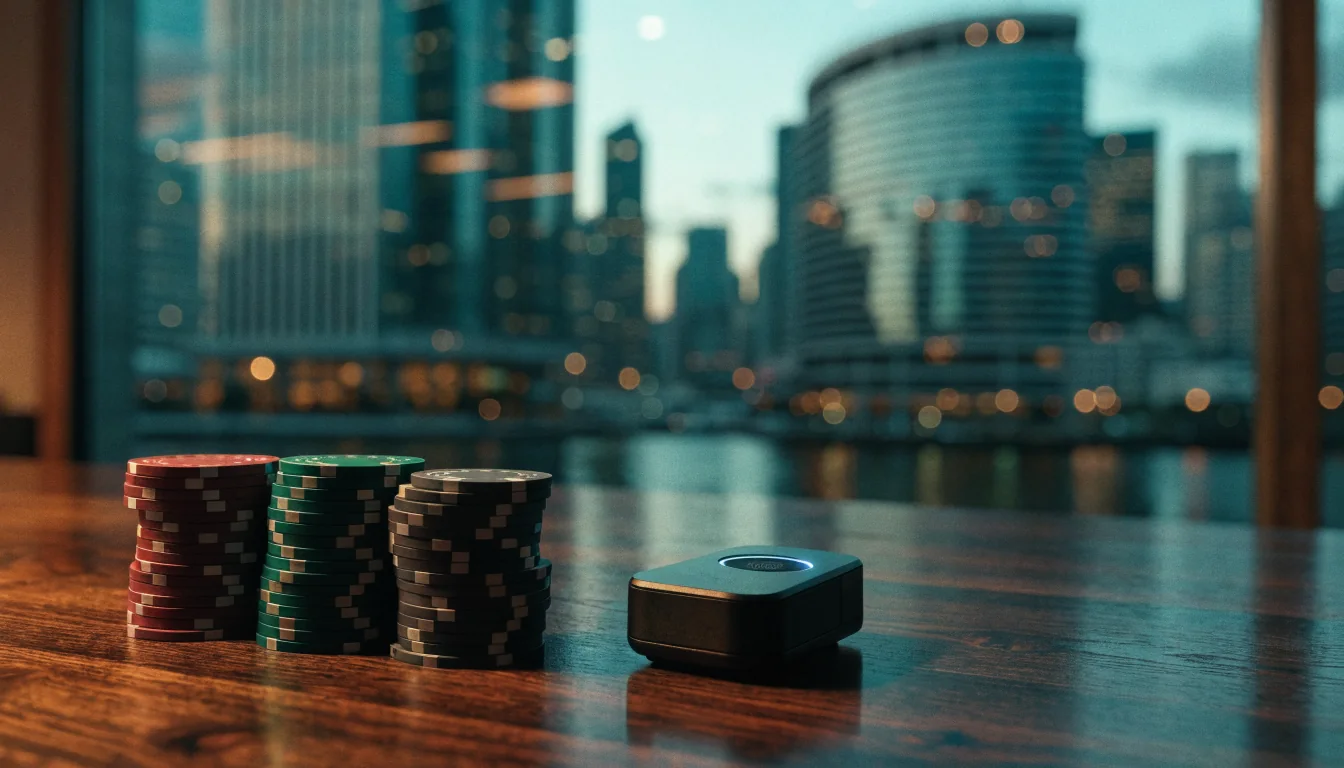
That is the quiet trick of the format: technical efficiency can resemble institutional safety. It is not the same thing. A fast transfer remains an offshore gambling payment, outside the protections attached to licensed Australian products. No shortcut.
When “Casino in Curaçao” Does Not Mean a Casino in Australia
The phrase “casino in Curaçao” compresses two different locations into one convenient label. Curaçao may be the place connected with the operator’s licence, corporate structure, or platform provider. The player, however, may be sitting in Australia, using an Australian device and payment account. Those facts do not merge merely because the website has a tropical address in its footer.
That geographic distance has practical consequences. Playing on a Curacao-licensed platform places the player outside the protection of Australian consumer law. The offshore operator is not an Australian casino, does not hold an Australian casino licence, and is not brought under domestic consumer protections by displaying a foreign licence. A flag, a Curaçao address, and a polished interface remain three separate things.
The distinction also matters for gambling support. Australian responsible-gambling arrangements include deposit limits, pausing play, and self-exclusion programs. Offshore websites may present tools with similar names, but their availability and operation belong to the operator’s own system. They should not be mistaken for the reach of Australian safeguards. BetStop does not cover offshore casinos, so a person who has excluded from Australian online wagering should not assume that the exclusion automatically follows them overseas.
This is less a technical loophole than a question of jurisdiction. The website can be accessible from Australia while its legal and operational centre sits elsewhere. Access is not approval. A login page does not turn an offshore business into a domestic one.
The sensible reading of “casino in Curaçao” is therefore precise: an offshore gambling service connected with Curaçao, used from Australia, and carrying protections that do not match those attached to domestic regulated products. It remains entertainment, not income. Players must be 18 or over and should gamble responsibly. Geography, in this case, is not decoration. It is the warning label.

How can a player verify an online casino licence in Australia?
Check the legal entity named in the casino’s terms or licence information and confirm that it matches the operator providing the service. A Curaçao licence, for example, is issued to a named company or platform provider rather than automatically to the casino brand.
What are the implications of demo mode and free play on financial rules?
The provided information does not establish specific financial rules for demo mode or free play. It only distinguishes technical game-fairness requirements from the financial and contractual conditions applying to real-money play.
What innovations are being tested in responsible gambling tools?
The available information identifies tools such as deposit limits, pausing play and self-exclusion, but does not describe specific innovations being tested.
Which entities regulate what type of gambling in Australia?
Domestic law agencies regulate licensed Australian gambling, including horse racing, lotteries and regular sports betting. The Curacao Gaming Control Board licenses named platform-provider companies under the Curaçao framework, while a Curaçao licence does not make an offshore casino a domestic Australian operator.
How does ACMA regulate gambling advertisements?
The provided information does not explain how ACMA regulates gambling advertising.
What information is shared with players about risk?
Players should be told about responsible-gambling controls, game-fairness arrangements and the limits of the applicable licence. A Curaçao licence does not guarantee prompt withdrawals, favourable bonus enforcement or a particular dispute outcome, and players on such platforms are outside Australian consumer-law protection.
What are the best practices for responsible gambling?
Use deposit limits, pause play when needed and activate self-exclusion if gambling is no longer controlled. These tools are part of the responsible-gambling measures expected from licensed operators.
Published by the Betting Insider Australia team.