Best Pokies in South Australia: Venues and Rules
 Available in US
A practical guide to local venues, operating hours, online boundaries, cashless play and payout percentages.
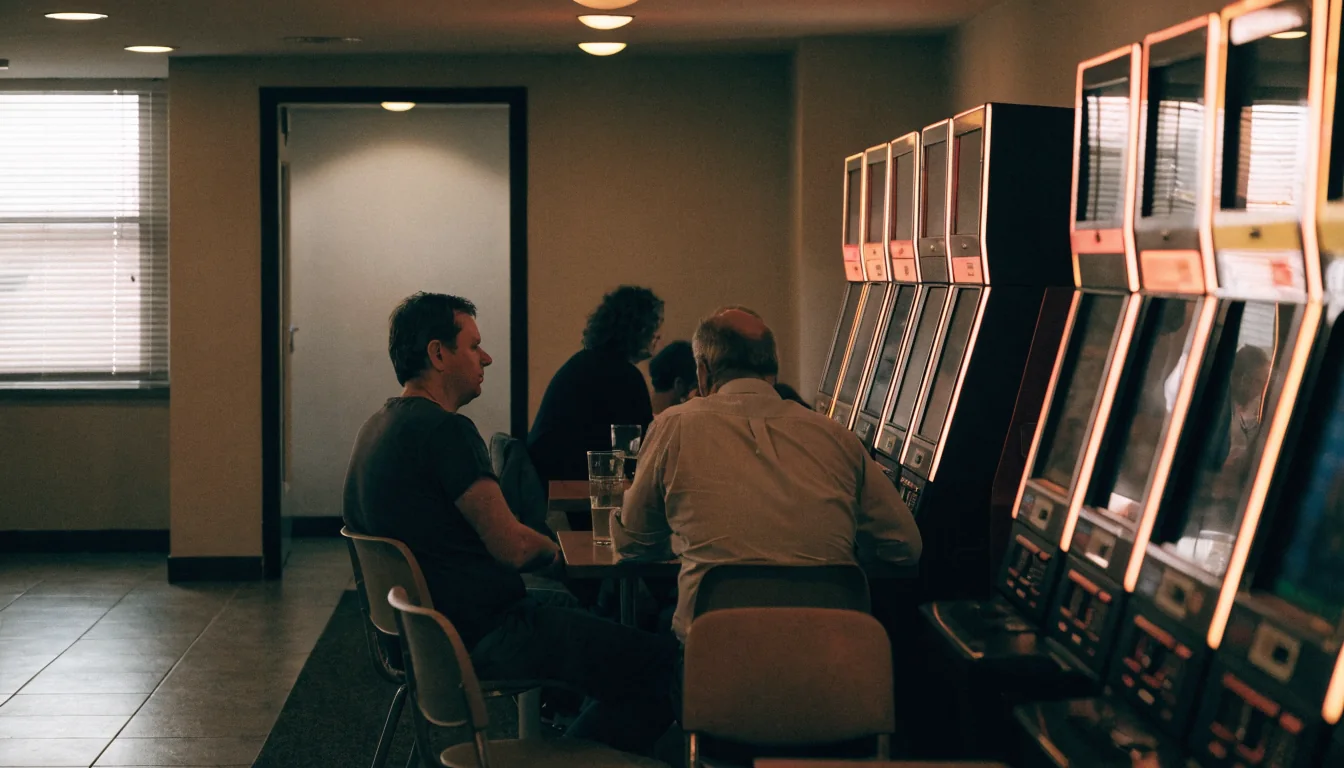
Table of Contents
- South Australia’s Pokies Landscape in 2026
- Online Pokies for South Australians: The Legal Line
- Late-Night Play: What “24-Hour” Pokies Really Means
- Cashless Pokies and the Limits of Convenience
- Pokies Near Adelaide Airport and Central South Australia
- Reading the South Australia Pokies Payout Percentage
- Which Pokies Pay Best in South Australia?
- Online Pokies Near South Australia: A Misleading Shortcut
- Pokies at Crown Casino South Australia: Check the Name First
- Can South Australia Pokies Run Until 5am?
South Australia’s Pokies Landscape in 2026
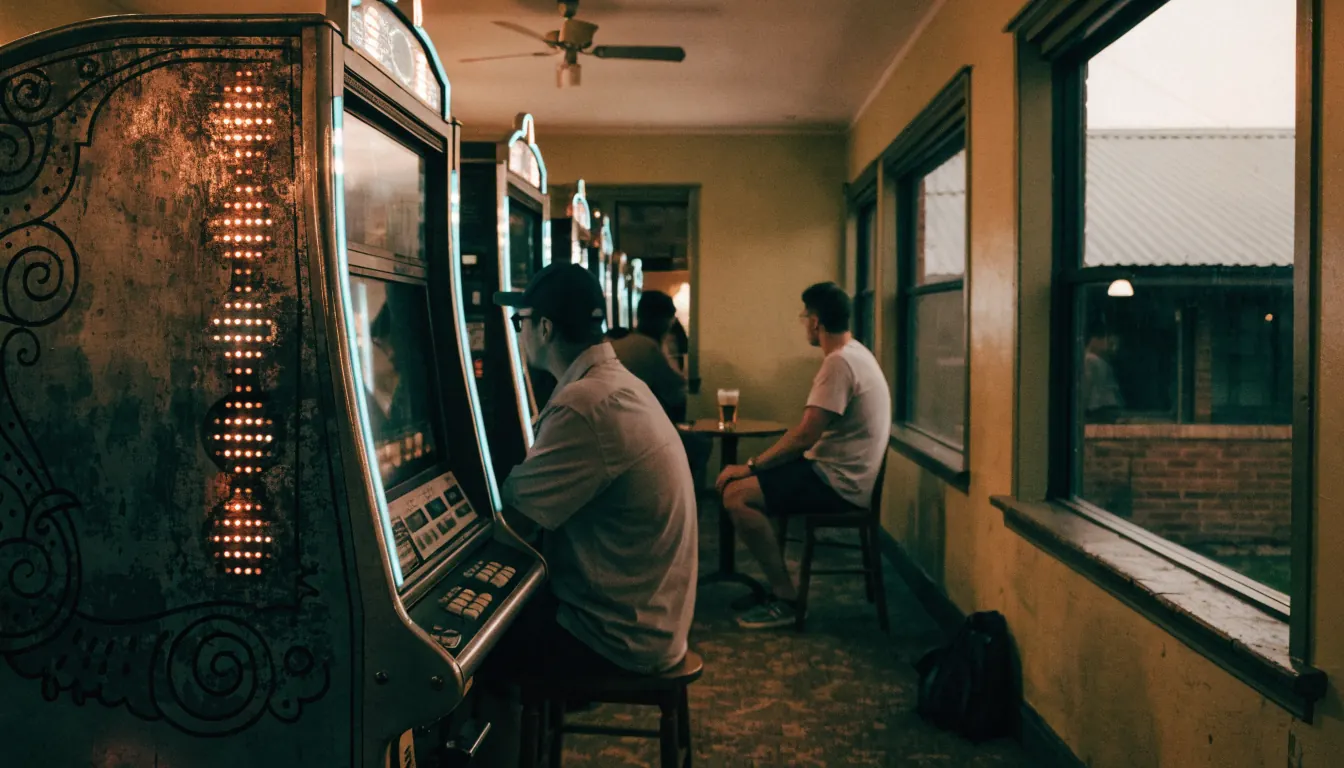
In South Australia, “pokies” is the ordinary local word for electronic gaming machines. “Slots” and “slot machines” are understood, but they belong more naturally to international casino language. The local vocabulary matters because it points to a particular setting: clubs, hotels, and licensed venues where gaming machines sit alongside bars, dining rooms, memberships, and the social routines of suburban life.
That setting is quite different from the image of a casino floor imported from Las Vegas. South Australian pokies are part of a regulated land-based gambling environment, not a single entertainment category with one national rulebook. Australia has no single overarching gambling statute or gambling authority. State and territory systems shape the practical conditions, including where machines may operate and when a venue may open its gaming area.
What “pokies venues” means in practice
A search for South Australia pokies venues is therefore less likely to identify one universal type of premises than a group of licensed local businesses. Hotels and clubs are central to the landscape, while casinos form a separate category with their own operating arrangements. A venue may be known for its dining, sport, live entertainment, or community role before its gaming machines are mentioned at all.
This guide highlights notable online pokies options for players in South Australia in 2026. Use the short verdicts to quickly review each operator’s available licensing, bonuses, deposit requirements, or payout details.
License: Curacao Gaming Control Board OGL/2023/176/0095 (Hollycorn N.V.) · Bonus: up to A$1,500 + 200 free spins across 3 deposits LuckyVibe operates under a Curacao Gaming Control Board licence held by Hollycorn N.V. Its welcome offer provides up to A$1,500 and 200 free spins across three deposits.
License: Curacao eGaming Licence · Min. deposit: A$10 Rocket Play is listed with a Curacao eGaming Licence. Its minimum deposit is A$10.
License: Curacao eGaming Licence · Min. deposit: A$10 Aussie Play is listed with a Curacao eGaming Licence. It accepts deposits from A$10.
License: Curacao, operated by Dama N.V. · Bonus: 325% up to 5.25 BTC + 250 free spins across 4 deposits 7Bit Casino is operated by Dama N.V. in Curacao. Its promotion offers 325% up to 5.25 BTC and 250 free spins across four deposits.
Bonus: 100% up to A$750 + 200 free spins, 35x wagering · Payout speed: crypto 30-120 minutes, fiat 24-72 hours · Min. deposit: A$30 MrPacho offers a 100% bonus up to A$750 plus 200 free spins, with 35x wagering. The minimum deposit is A$30, while stated payout times are 30–120 minutes for crypto and 24–72 hours for fiat.
License: Curacao – Antillephone N.V. (Versus Odds B.V.) · Bonus: up to EUR 2,000 across 5 deposits + 200 free spins · Min. deposit: EUR 20 Thor Casino is licensed in Curacao by Antillephone N.V. for Versus Odds B.V. Its offer includes up to EUR 2,000 across five deposits and 200 free spins, with a EUR 20 minimum deposit.
License: Curacao eGaming OGL/2024/923/0383 (Antillephone N.V.) · Bonus: up to A$2,000 + 100 free spins across 2 deposits · Min. deposit: A$30 WinSpirit Casino holds a Curacao eGaming licence issued to Antillephone N.V. Its promotion offers up to A$2,000 and 100 free spins across two deposits, with a A$30 minimum deposit.
License: Curacao · Bonus: up to A$2,000 Golden Pokies is listed as licensed in Curacao. Its stated bonus is worth up to A$2,000.
License: Curacao Gaming Control Board (TechSolutions Group N.V.) · Bonus: 100% up to A$250 + 100 free spins (1st deposit) Bizzo Casino is licensed by the Curacao Gaming Control Board through TechSolutions Group N.V. Its first-deposit promotion includes a 100% bonus up to A$250 and 100 free spins.
License: Curacao Gaming Control Board · Bonus: up to A$5,000 + 400 free spins JustCasino is listed with a Curacao Gaming Control Board licence. Its promotion offers up to A$5,000 and 400 free spins.
This helps explain why phrases such as “South Australia pokies open now” can be deceptively simple. The relevant question is not merely whether machines exist in the state. It is whether a particular venue is trading, whether its gaming area is operating, and whether the local conditions permit play at that time. “Open” can describe the front door, the restaurant, or the bar. It does not automatically describe every activity inside.
South Australia pokies opening hours are consequently a venue matter. They are not a single statewide timetable that can be applied to every hotel, club, or casino. A result presented as a general answer to South Australia pokies hours may be little more than a list of businesses with different schedules and different operating conditions. The plainest useful distinction is also the least glamorous:
Venue hours are local.
The phrase “best pokies South Australia CBD” carries the same complication in miniature. A central Adelaide venue may be convenient, but convenience is not a mathematical property of the machine. Location, food service, transport, atmosphere, and opening arrangements belong to the venue; game mechanics belong to the individual pokie.
How to judge a pokie without folklore
The language of “best paying pokies in South Australia” often suggests that one machine is generous in the way a shop might be well stocked. Pokies do not work like that. Two concepts provide a more disciplined way to describe them: RTP and volatility.
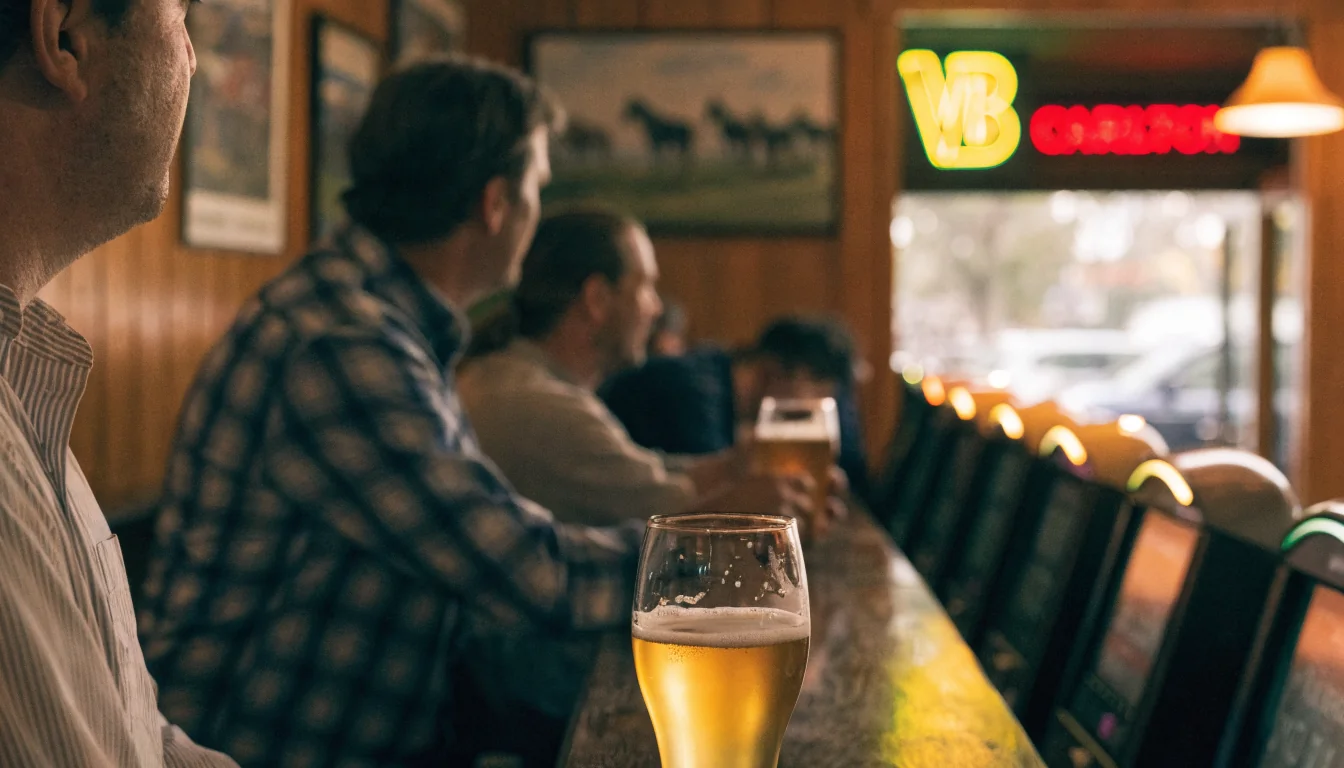
RTP, or Return to Player, is a long-term theoretical average. It does not predict the result of one visit, one evening, or one sequence of spins. A machine with a published RTP is not making a promise about the next session. It is describing a mathematical expectation across a very large number of plays.
Volatility describes the shape of the experience. High-volatility pokies tend to pay less frequently, with larger amounts when wins occur. Low-volatility pokies tend to pay more frequently, with smaller amounts. Neither category is a synonym for “best”. One reflects longer gaps and more pronounced swings; the other may produce steadier, smaller outcomes. Preferences can differ. Mathematics remains indifferent.
Most importantly, each spin is independent. The previous result has no bearing on the next outcome. A losing sequence does not make a win “due”, and a recent win does not make another result less likely. The machine has no memory, however much human memory tries to provide one.
That independence also limits what can reasonably be inferred from stories about a venue. A machine that paid well yesterday has not acquired a warmer disposition today. A quiet afternoon does not create an advantage. Nor does a crowded room turn a particular pokie into a communal source of luck.
The legal local menu
For South Australians, the lawful gambling landscape includes land-based casinos, licensed bookies, and lotteries. Those products sit within different regulatory arrangements and should not be treated as interchangeable simply because money changes hands in each case. Land-based pokies belong to the physical venue framework; wagering and lotteries have their own licensing structures and rules.
Legal Status Real-money online casino games, including pokies, are prohibited in Australia under the Interactive Gambling Act 2001.
This is why a careful account of the best pokies in South Australia in 2026 should begin with place, terminology, hours, and game mathematics rather than a theatrical ranking. No machine can be declared universally best from a location label alone. A CBD venue, a suburban club, and a regional hotel may offer entirely different surroundings, while the next spin remains governed by the same unromantic principle.
The reels do not know the postcode.
Online Pokies for South Australians: The Legal Line
For South Australians, the legal boundary around online pokies is unusually clear, even if the advertising around it is not. Real-money online casino games, including pokies, are prohibited from being offered to people in Australia under the Interactive Gambling Act 2001 (IGA). The law is the main federal framework governing online gambling, and it draws a firm distinction between wagering products that may be licensed and online casino games that may not.
There is no Australian licence for online pokies. None has ever existed. That matters more than the wording on a homepage, the appearance of a familiar brand, or a banner promising a generous welcome offer. A platform can describe itself as an Australian online casino, accept Australian dollars, or display Australian-themed language without becoming an Australian-licensed casino. Branding is not regulation.

What the Interactive Gambling Act covers
The IGA targets providers that offer prohibited interactive gambling services to Australian customers. Online pokies sit in that category alongside other online casino products. The prohibition applies to the service being offered, not merely to the way a website presents its games.
This is why phrases such as “real-money pokies for South Australians” need careful interpretation. They may describe an offshore website willing to accept Australian residents, but they do not describe a product licensed in South Australia or elsewhere in Australia. The commercial invitation and the legal status are separate things. That separation is less glamorous than a bonus banner, but considerably more useful.
The enforcement focus is also important. Players are not prosecuted under the Interactive Gambling Act for using an offshore site. The law is directed at the provider rather than treating the individual punter as the primary offender. That does not turn every offshore platform into a safe or protected option; it simply identifies whom the legislation is designed to regulate and pursue.
Licensing Reality There is no such thing as an Australian licence for online pokies. Branding and local terminology do not equate to legal regulation.
South Australia therefore cannot issue a local licence for an online pokies product that Australian law prohibits providers from offering. A search for South Australia casino online pokies may produce pages that look local, but location language alone proves nothing about licensing, oversight, or consumer protection.
Offshore acceptance is not Australian approval
Australian residents can legally play online pokies at licensed offshore casinos. Such operators may be based in Curaçao, Anjouan, or comparable jurisdictions and may accept Australian customers under their own offshore regulatory arrangements. Their licence, where one exists, comes from that foreign jurisdiction. It is not an Australian casino licence.
That distinction should remain visible throughout any assessment of an offshore platform:
- an offshore licence is not an Australian licence;
- accepting Australian residents is not the same as being licensed in Australia;
- an Australian-facing website is not necessarily subject to Australian casino regulation;
- the name “pokies” does not prove legality, fairness, or consumer protection.
A provider presenting online pokies to South Australians should state its regulatory position plainly rather than allowing local currency, local terminology, or an Australian-facing promotion to do the talking. Clear information about game rules, bonus conditions, and withdrawals is part of responsible disclosure, but it cannot cure the absence of an Australian online casino licence.
Bonuses do not change the product
Promotions built around “no deposit” or real-money play can make the legal line look deliberately faint. A no-deposit offer remains connected to an online casino product; removing an initial payment does not convert prohibited online pokies into a licensed Australian service. Nor does a maximum cash payout promise establish that a platform is authorised in South Australia.
The same applies to searches for high-limit pokies. Bet size, payout language, and promotional design are commercial features, not evidence of regulatory status. A large theoretical prize does not create a domestic licence, and a small stake does not make a prohibited service locally licensed. Money changes hands in both cases. The legal question comes first.
Self-exclusion and provider responsibility
Self-exclusion is another area where offshore claims require precision. A provider may offer its own account closure or self-exclusion tools, but those arrangements should not be confused with Australian national protection systems. Offshore casinos are not covered by BetStop or national self-exclusion registers.

For a platform serving Australian residents, responsibility therefore includes more than displaying a licence badge. Its terms should explain identity checks, account restrictions, bonus conditions, and withdrawal procedures in language that does not blur offshore operation with Australian approval. A licence from Curaçao or Anjouan may identify the jurisdiction regulating the operator, but it does not relocate the operator into South Australia.
The legal line is not hidden in the reels. It sits above them. Australian-licensed online pokies do not exist; offshore operators may accept Australians under foreign licensing arrangements; and the Interactive Gambling Act places the provider, rather than the player, at the centre of enforcement. That is the framework in which every South Australian online pokies offer should be read.
Late-Night Play: What “24-Hour” Pokies Really Means
The phrase “24-hour pokies” sounds more definite than it is. In South Australia, it may describe a late-night search for a club, hotel or casino, not a venue that keeps its gaming floor operating without interruption. The distinction matters because a pokie is not a free-floating digital object in this setting. It sits inside a licensed premises, under local trading rules, with staff, security, alcohol service and closing obligations nearby.
A venue listed as open now is therefore not automatically a venue where pokies are available now. The front door may remain open while gaming areas operate under different conditions. A bar may trade late while machines are unavailable. A club may advertise evening entertainment without implying continuous access to its electronic gaming machines. Opening hours are not a promise about every activity under the roof.
- Check the specific venue’s official trading hours
- Verify if the gaming area is separately operating
- Confirm entry and identification requirements
- Assume a venue is open just because the front door is
- Rely on generic directory listings for late-night access
- Treat a website’s availability as a local venue service
Clubs, Hotels and Casino Floors
South Australia clubs with pokies are part of the land-based gambling environment available to Australians. Hotels may also offer electronic gaming machines where the relevant permissions and venue arrangements allow it. These are distinct settings, even when a search result compresses them into the same phrase.
A club usually presents itself as a member-oriented social venue, although the practical experience can vary considerably between premises. A hotel may combine dining, drinks and gaming in a more commercial arrangement. A casino floor is a dedicated gambling environment with its own operating structure. None of those labels, by themselves, establishes that a particular venue is open at a particular hour.
The same caution applies to a reference to Crown and South Australia. A brand name can be carried into a search without proving that a South Australian venue exists under that name, that its gaming area operates all night, or that an online product bearing the name is locally licensed. Names travel more easily than legal permissions. That is one of gambling’s less charming administrative talents.
What “Open Now” Can and Cannot Establish
Current availability has to be checked against the actual venue, not inferred from a generic description. A reliable check would need to distinguish at least three things:
- whether the premises is trading;
- whether the gaming area is operating;
- whether the person seeking access meets the venue’s entry and identification conditions.
Those details can change independently. A public holiday, a special event, maintenance, a staffing decision or a local restriction may alter the practical position without changing the venue’s general profile. An old directory entry is particularly poor evidence for late-night access. “Open” is a narrow word. It does not perform legal research.
The same principle applies across metropolitan Adelaide and regional or northern South Australia. A phrase such as “north South Australia pokies” may refer to a broad geographic area rather than a single town, venue or operating schedule. Distance becomes part of the question: a venue can be technically open while being impractical to reach, and a nearby venue can be unsuitable because its gaming facilities are not operating at that time.
The Difference Between a Venue and a Website
Continuous online availability creates another source of confusion. A website may display a game at any hour, but that technical availability is not equivalent to a South Australian venue operating around the clock. Online casino games, including pokies, are prohibited from being offered to people in Australia. The fact that a page loads late at night does not convert it into a lawful local alternative.
For Australians, the permitted online gambling categories include pre-event sports and racing wagering, lotteries and keno. Land-based casinos remain among the legal options for gambling, alongside licensed bookies and lotteries. That split is deliberate rather than accidental: the law permits some products while excluding online casino-style games offered to Australian customers.
Important Distinction Attention A website loading at any hour does not make it a lawful local alternative to a land-based venue.
A late-night online screen can therefore create the appearance of uninterrupted choice while providing none of the local protections implied by a South Australian venue. It may use Australian language, quote Australian dollars or accept local traffic. Those features do not establish an Australian casino licence. No such licence exists for real-money online casino games.
A Sensible Reading of Late-Night Listings
For anyone assessing a possible after-hours venue, the useful question is not “Is it a 24-hour pokie venue?” but “What exactly is confirmed about this premises at this time?” The answer should come from the venue’s current official information and, where necessary, direct confirmation. A generic listing can identify a location; it cannot manufacture a trading authorisation.
This also prevents a common category error. A venue may offer pokies without offering them continuously. A website may offer continuous access without offering a lawful Australian casino service. The two claims look similar in casual language, but they belong to different legal and practical worlds.
Late-night play, then, is less about a magical twenty-four-hour machine than about the boundary between premises, permissions and presentation. The lights may be on. The reels may not be.
Cashless Pokies and the Limits of Convenience
Cashless play changes the feel of pokies before it changes the mathematics. Notes and coins make spending visible: money leaves the hand, the wallet becomes thinner, and the decision has a small physical pause built into it. A digital balance removes that pause. In a South Australian venue, a carded or cashless system can make account access, identity checks and transaction records more orderly, but convenience is not the same thing as protection.
The important question is not simply whether a casino or club offers cashless pokies. It is what the system records, which limits can be applied, and how clearly the venue explains the movement of funds. A compliant arrangement should make deposits, withdrawals, session controls and self-exclusion options intelligible rather than hiding them behind a brightly coloured interface.
What cashless play should disclose
For land-based casino pokies, cashless play may connect a punter’s identity to a digital account or card. That can support carded play and make spending history easier to review. It also creates a responsibility for the operator: personal and financial information must be protected with SSL encryption, and the terms governing the account should be available before money is loaded.
A useful disclosure should cover:
- how funds are deposited and withdrawn;
- whether deposit limits can be set;
- how self-exclusion works;
- whether session time reminders are available;
- how identity verification is handled;
- what happens when an account is closed or a withdrawal is requested;
- which games, stakes and transaction methods are restricted.
The last point matters for anyone comparing max-bet pokies in South Australia. A maximum stake is a game setting, not a recommendation and certainly not a route to a jackpot. Betting the maximum does not guarantee a jackpot. The machine remains a machine, with independent spins and no memory of the previous result.
PayID and the online payment question
PayID is an Australian payment method linked directly to an Australian bank account. It settles deposits instantly without a card-processing delay, and PayID itself does not charge players a transaction fee. Those features explain its appeal in discussions of online pokies for South Australians, even though payment convenience does not turn an online casino into an Australian-licensed product.
Timing claims need careful handling. A specialist review reports PayID deposits reaching the casino balance within two to five minutes, while another specialist review reports deposits at verified Australian-facing offshore casinos crediting in under 60 seconds. These are source-specific observations, not a universal service standard. Withdrawals are a separate matter: a specialist review reports PayID withdrawals clearing within one to 24 hours after account verification. Verification is therefore part of the payment process, not an administrative footnote.
PayID Usage While PayID offers instant settlement for deposits in some offshore contexts, it is not a substitute for Australian regulatory oversight.
Verification is a mandatory part of the payment process and can affect how quickly funds are handled.
A platform should also state whether PayID supports withdrawals as well as deposits. Deposit support alone does not establish withdrawal support. The distinction is dull, but so are many expensive surprises.
The payment boundary
Since 11 June 2024, credit cards, credit-related products and cryptocurrency have been banned as payment methods for online wagering in Australia, according to a specialist regulatory overview. Any platform presenting payment information to Australian users should reflect that restriction clearly. It should not invite deposits by credit card or cryptocurrency, describe those methods as an advantage, or bury the position in a distant help page.
Payment pages should set out applicable limits, processing conditions, identity requirements and withdrawal procedures in plain language. Bonus terms should disclose wagering requirements, expiry dates, betting limits and restricted games. “Instant” should not be allowed to mean only the moment a deposit is accepted while the withdrawal remains unexplained.
Cashless pokies can make records cleaner and spending less cumbersome. They can also make spending feel less real. The safeguard is not the absence of technology but the presence of friction where it matters: visible limits, understandable terms, verified identity, protected data and a clear route to stop play. Convenience has boundaries.
Pokies Near Adelaide Airport and Central South Australia
Location matters when the attraction is a physical venue rather than a screen. A short transfer from Adelaide Airport may be useful after a flight, while a central South Australian location may suit someone already moving through the city or regional centre. Neither phrase, however, identifies a particular club, casino, or gaming room. Geography is a starting point, not a verification.
Venue Verification
- Confirm the exact physical address
- Verify if electronic gaming machines are available on-site
- Check current trading hours for the gaming area
- Assess practical transport and accessibility
A sensible nearby option should be assessed as a land-based venue. That means confirming the exact address, whether pokies are actually available, and whether the venue is operating at the intended time. Airport proximity can be deceptive: a place that appears close on a map may still require a longer road journey, while a central address may refer to offices, accommodation, or a hospitality business with no electronic gaming machines at all. Maps are helpful. They are not licences.
The legal distinction is equally plain. Australians can play pokies at land-based casinos, while licensed bookies and lotteries are separate legal gambling options. Pre-event sports and racing wagering, lotteries, and keno are among the online products that may be permitted and licensable; that does not turn a nearby land-based venue into an online casino, nor does a venue’s proximity say anything about online gambling rights.
A practical location check
Before treating a venue as suitable, the useful questions are modest:
- Is the address genuinely near Adelaide Airport or the intended central area?
- Does the venue identify pokies or electronic gaming machines among its facilities?
- Are the venue’s own trading details current?
- Is the location a casino, club, hotel, or another type of licensed premises?
- Are transport, parking, and accessibility practical for the visit?
This approach avoids a common mistake: assuming that a broad regional label guarantees a verified local choice. “Near Adelaide Airport” describes a radius. “Central South Australia” describes an even less precise one. The words sound specific only until a map is opened.
A nearby venue can offer convenience, but convenience is not evidence of better games, better returns, or special treatment. Those are separate questions, and distance cannot answer them. For location-based play, the honest shortlist is therefore built from a confirmed address and venue details—not from a polished name attached to an unverified pin.
Reading the South Australia Pokies Payout Percentage
The phrase “payout percentage” sounds reassuringly precise. In practice, the relevant measure is RTP, or Return to Player: a long-term theoretical average showing how much a pokie is designed to return across a very large number of spins. It is a mathematical property of the game, not a promise attached to one visit in South Australia.
A game with a stated RTP does not owe that proportion back during a particular session. A short run may produce several wins, no meaningful win, or a result that looks entirely unrelated to the advertised figure. Each spin is independent, and the previous outcome has no influence on the next one. The machine has no memory, no sense of fairness, and certainly no obligation to balance the books before closing time.
What RTP can—and cannot—tell
RTP helps compare game mathematics over the long term. It does not predict:
- the result of the next spin;
- the return from one evening;
- how frequently wins will appear;
- the size of individual payouts;
- whether a particular venue or platform will produce a favourable session.
That last distinction matters because RTP is not the same as the feel of a game. Two pokies can both present a theoretical return while producing very different short-term experiences. Volatility describes that pattern: high-variance pokies tend to pay less frequently but in larger amounts, whereas low-variance pokies tend to pay more often in smaller amounts.
For online products presented to Australians, game integrity should also be separated from marketing language. Licensed Australian-facing platforms are required to use independently audited random number generators. That requirement concerns whether outcomes are generated fairly and independently; it does not turn RTP into a personal forecast.
So the South Australian payout percentage is best read as a distant statistical measurement. Useful for comparison. Useless as a guarantee.
Which Pokies Pay Best in South Australia?
“Best paying” sounds like a shopping list, but pokie mathematics is less obliging. No game can promise a winning session, and a higher theoretical return would not make one spin more likely to succeed. The useful comparison is volatility: how often a game tends to pay and how large those payments may be.
High-variance pokies pay less frequently, but their wins can be larger. They suit a punter who accepts long quiet stretches in exchange for the possibility of a more dramatic payout. Low-variance pokies distribute wins more often, generally in smaller amounts. That can make play feel steadier, though it does not turn the machine into a reliable source of income.
What “best” can mean
A sensible assessment separates three ideas:
- RTP: the long-term theoretical return of the game, not a promise for one visit.
- Volatility: the pattern of wins, from frequent smaller results to less frequent larger ones.
- Short-term outcome: what happens during a particular session, which remains uncertain.
RTP does not cancel volatility. A game may have an attractive theoretical return and still produce a rough sequence of spins. Conversely, a low-variance game may feel active without producing a profitable result. The reels are not keeping score in the human sense.
That same mathematics applies across formats. Online pokies and land-based slot machines use the same reels, RTP and volatility; the main distinction is local terminology. Calling a machine a “pokie” rather than a “slot” changes the vocabulary, not the underlying probabilities.
Most importantly, each spin is independent. A losing result does not make a win “due”, and a recent payout does not reduce the chance of another outcome. Past spins have no bearing on the next one.
So the best-paying pokie is not a guaranteed winner. It is a game whose RTP and volatility are understood, with expectations kept firmly on the mathematical side of the machine.
Understanding Pokies
- High volatility means larger, less frequent wins.
- Low volatility means smaller, more frequent wins.
- RTP is a long-term mathematical average, not a session guarantee.
- Every spin is an independent event with no memory of previous results.
Online Pokies Near South Australia: A Misleading Shortcut
“Near South Australia” makes sense for a pub, club, or casino. It becomes a curious label when attached to an online pokie. A digital game has no physical address in Adelaide, Mount Gambier, or anywhere else in the state. The server may sit in another jurisdiction, while the player sits at home. Geography has been reduced to a loading screen.
That distinction matters because location language can suggest protections that have not been established. A platform describing itself as serving South Australians is not thereby Australian-licensed. There is no Australian licence for online pokies, and none has ever existed. The phrase “Australian pokies” may describe the intended audience, the currency displayed, or the terminology used on the page. It does not create a local regulatory status.
Nor does the word pokies settle the practical questions surrounding a site. It does not prove that Australian payment methods are supported, that withdrawals work for South Australian residents, or that consumer safeguards apply. Those are separate matters requiring clear evidence. A familiar label is not a licence.
The games themselves are less geographically distinctive than the marketing. Online pokies and slot machines use the same reels, RTP, and volatility; the main difference here is local terminology. Australians say “pokies”, while international operators often say “slots”. Changing the name does not change the mathematics, the operator’s jurisdiction, or the protections available around a transaction.
Interactive Gambling Act 2001 The main federal framework in Australia that prohibits the provision of online casino services to Australian customers.
Real-money online casinos offering pokies to Australians are banned under the Interactive Gambling Act 2001. That makes “near” an especially poor shortcut: proximity cannot turn a prohibited online product into a South Australian venue. A physical venue and a remote website belong to different regulatory categories.
The sensible reading is therefore narrow. “Online pokies near South Australia” usually means online pokies accessible from South Australia, not games physically located there. Accessible is not the same as locally licensed, locally protected, or locally operated. Distance is only the first illusion.
Pokies at Crown Casino South Australia: Check the Name First
The phrase “Crown Casino South Australia” sounds precise, but the name itself proves very little. A familiar casino brand can be attached to a different state, a different venue, or an offshore website using Australian-facing language. Geography is not a licence.
For land-based play, the relevant legal category is straightforward: Australians may use land-based casinos, licensed bookmakers and lotteries. A physical venue must still be identified by its actual location and operating authority; a Crown-branded search result does not establish that a particular South Australian venue exists, offers pokies, or is open at a particular time.
The online version is more easily muddled. A website may display “Crown”, “casino”, or “pokies” in its branding, yet no Australian licence for online pokies exists, and none has ever existed. The Crown name cannot create one by implication. Nor can an offshore operator turn a prohibited online casino product into a locally licensed service merely by accepting Australian visitors.
That leaves two separate questions:
- Is there a real, identifiable land-based casino in South Australia offering pokies under the relevant local arrangements?
- Is an online platform using Crown-related branding offering a product that Australian law permits?
The first requires checking the venue rather than trusting the label. The second has a firmer answer: online casino games, including pokies, are prohibited from being offered to people in Australia. An offshore website may present itself as available, but availability on a screen is not the same thing as an Australian licence or domestic consumer protection.
Brand recognition is a poor substitute for legal identity. A gold logo does not improve the paperwork.
Can South Australia Pokies Run Until 5am?
A South Australian venue may trade late, but “open until 5am” is not a universal description of pokies availability. A club, hotel or casino operates under its authorised trading conditions, and those conditions determine when electronic gaming machines can be used on the premises. The word open is doing too much work otherwise.
Late-night availability also depends on the venue itself. A listing may show a building open to guests while the gaming area follows different conditions. Another venue may close earlier, pause gaming, or operate under rules that do not match the hours displayed on a directory or social-media page. Unnamed venues therefore cannot be presented as confirmed five-o’clock options.
There is a second distinction, less visible but more important. An online pokie may be technically accessible at any hour, yet that does not make it a lawful Australian gambling product. Real-money online casinos offering pokies to Australians are banned under the Interactive Gambling Act 2001. A screen that keeps loading through the night is not evidence of an Australian licence, local authorisation or consumer protection.
For South Australians seeking a legal late-night alternative, the relevant category is land-based gambling. Legal options include land-based casinos, licensed bookies and lotteries. Online products that can be permitted and licensed for Australians include pre-event sports and racing wagering, lotteries and keno—not online casino games such as pokies.
The practical test is therefore narrow: confirm the venue’s own authorised trading information, and treat “open” as a statement about premises rather than a blanket permission to play. Online availability is a separate question, governed by federal law rather than the hour shown on a device.
Five o’clock is not a licence.
Is it legal to play online pokies in Australia?
No, real-money online casino games, including pokies, cannot legally be offered to people in Australia under the Interactive Gambling Act 2001. Players themselves are not prosecuted under the Act; enforcement targets providers.
What is the best paying online pokie in Australia?
No single online pokie can be called the best-paying option. RTP is a long-term theoretical average, while volatility affects how often and how much a game pays; neither predicts an individual session.
Does Neosurf charge fees?
No information is provided about Neosurf fees. PayID itself does not charge players a transaction fee, but that does not establish the fees for Neosurf.
Published by the Betting Insider Australia team.