Best Progressive Jackpot Slots: How They Work
 Available in US
Understand the prize meter, independent spins, market limits and conditions behind progressive jackpot games.

Table of Contents
- What Progressive Jackpots Actually Change About a Slot
- The Australian Online Casino Contradiction
- Progressive Jackpot Pokies in Australia: A Market with a Missing Online Half
- How Progressive Jackpot Slot Machines Keep the Drama on the Reels
- Progressive Jackpot Games and the Problem of “Largest”
- Microgaming, Online Slots and the Provider Question
- Reading a Progressive Slot Jackpot Without Falling for the Meter
- Progressive Jackpot Slots for Real Money: The Cost Is in the Conditions
- Progressive Jackpot Slots Online: What the Screen Cannot Prove
- Progressive Jackpot Casinos: A Name Is Not a Licence
What Progressive Jackpots Actually Change About a Slot
A progressive jackpot changes the destination of part of the game’s money, not the basic mathematics of a spin. The reels may carry a rising prize meter, but the symbols still arrive through a Random Number Generator (RNG). One result is produced, then the next. The jackpot does not make the machine remember the previous spin, and it does not turn a near miss into a promise.
That distinction matters when comparing progressive jackpot slots or looking for the best progressive jackpot slots in 2026. The word progressive describes the prize pool’s movement. It does not describe a warmer, cleverer, or more generous form of randomness.
The spin remains an isolated event
Each spin on online pokies is independent. The previous result has no bearing on the next result, whether the last spin produced a substantial win, a small return, or nothing at all. This is true even when a jackpot meter has been climbing visibly while the reels continue to turn.
This shortlist brings together operators worth checking when exploring progressive jackpot slots for Australian players in 2026. Use each snapshot to review the available licensing, bonuses, deposit requirements, and payment details before choosing where to play.
License: Curacao Gaming Control Board OGL/2023/176/0095 (Hollycorn N.V.) · Bonus: up to A$1,500 + 200 free spins across 3 deposits LuckyVibe is notable for its stated Curacao Gaming Control Board licence and a welcome offer of up to A$1,500 plus 200 free spins across three deposits.
License: Curacao eGaming Licence · Min. deposit: A$10 Rocket Play operates under a Curacao eGaming Licence and lists a minimum deposit of A$10.
License: Curacao eGaming Licence · Min. deposit: A$10 Aussie Play operates under a Curacao eGaming Licence and lists a minimum deposit of A$10.
License: Curacao, operated by Dama N.V. · Bonus: 325% up to 5.25 BTC + 250 free spins across 4 deposits 7Bit Casino is operated by Dama N.V. in Curacao and features a bonus of 325% up to 5.25 BTC plus 250 free spins across four deposits.
Bonus: 100% up to A$750 + 200 free spins, 35x wagering · Payout speed: crypto 30-120 minutes, fiat 24-72 hours · Min. deposit: A$30 MrPacho offers 100% up to A$750 plus 200 free spins, with 35x wagering. Its listed payout times are 30–120 minutes for crypto and 24–72 hours for fiat, with a minimum deposit of A$30.
License: Curacao – Antillephone N.V. (Versus Odds B.V.) · Bonus: up to EUR 2,000 across 5 deposits + 200 free spins · Min. deposit: EUR 20 Thor Casino is licensed in Curacao by Antillephone N.V. for Versus Odds B.V. Its offer reaches up to EUR 2,000 across five deposits and includes 200 free spins, with a minimum deposit of EUR 20.
License: Curacao eGaming OGL/2024/923/0383 (Antillephone N.V.) · Bonus: up to A$2,000 + 100 free spins across 2 deposits · Min. deposit: A$30 WinSpirit Casino holds a Curacao eGaming licence and offers up to A$2,000 plus 100 free spins across two deposits. The listed minimum deposit is A$30.
License: Curacao · Bonus: up to A$2,000 Golden Pokies is licensed in Curacao and features a bonus of up to A$2,000.
License: Curacao Gaming Control Board (TechSolutions Group N.V.) · Bonus: 100% up to A$250 + 100 free spins (1st deposit) Bizzo Casino operates under a Curacao Gaming Control Board licence and offers 100% up to A$250 plus 100 free spins on the first deposit.
License: Curacao Gaming Control Board · Bonus: up to A$5,000 + 400 free spins JustCasino operates under a Curacao Gaming Control Board licence and lists a bonus of up to A$5,000 plus 400 free spins.
A slot with a progressive jackpot therefore contains two separate ideas:
- the outcome of the current spin;
- the changing value of a prize pool.
The second can rise over time while the first remains unaffected by earlier play. A large displayed jackpot may attract attention, but it does not make the next combination more likely. The meter is a record of the prize pool, not a forecast.
This is where the phrase slots with progressive jackpot can become misleading. It sounds as though the jackpot is a property added to every ordinary result. In practice, the progressive feature is an additional prize mechanism governed by the game’s rules. It may be connected to a particular combination, a bonus event, or another stated condition. The exact trigger belongs to the individual game; the independence of the spin belongs to the underlying mathematics.
What the RNG does — and does not do
The RNG is the quiet machinery beneath the theatrical surface. It operates independently of time, player traffic, and external factors. Online pokies use RNG technology so that each spin is independent and random.
That rules out several popular stories. A busy game is not made more generous by traffic. A quiet hour does not make a jackpot “due”. A sequence of losing results does not build pressure inside the software. Nor does a recently awarded jackpot create a period in which another must wait.
The display can be dramatic: tumbling symbols, bonus mini-games, multipliers, wilds, scatters, or a progressive jackpot counter. Modern pokies use all of these devices to make the result visible and memorable. They alter the presentation and, depending on the game rules, the ways in which prizes are formed. They do not give the player a way to influence the RNG through timing or mood.
The machine is not sulking. It is calculating.
RTP is not a session promise
Return to Player, or RTP, is a long-run statistical average calculated across tens of millions of spins. It is not a guaranteed return for an individual session. A stated RTP therefore describes the theoretical distribution of results over an exceptionally large number of plays, not the amount that a particular person will receive during one sitting.
This difference becomes sharper in progressive games because part of the attraction lies in an unusually large possible prize. A jackpot may dominate the game’s advertising language while remaining an extremely uncommon outcome. The existence of that prize does not mean that the average session will resemble it.

RTP should consequently be read as a mathematical property of the game over the long run. It is not a refund mechanism, a target, or a timetable. A player can experience a result far above the long-run average, or far below it, without contradicting the RTP. Randomness is perfectly capable of producing uncomfortable short-term outcomes.
Variance shapes the rhythm
Variance describes how frequently a game pays and how large those payments tend to be. High-variance pokies pay out less often but in larger amounts. Low-variance pokies pay out more often but in smaller amounts.
Progressive jackpot slots can make this distinction emotionally louder. A high-variance game may offer long stretches without a meaningful return, followed by the possibility of a much larger prize. A lower-variance design may produce more frequent wins, but those wins are generally smaller. Neither pattern changes the independence of the next spin.
Variance is not the same thing as RTP. Two games can have a related long-run return while producing very different experiences between the beginning and end of that statistical horizon. One may feel busy and reassuring because small wins appear more often. Another may feel barren until a larger event arrives. The feeling is part of the design; it is not evidence that the RNG has changed.
What a progressive jackpot really adds
The progressive element adds a moving prize pool and another layer of expectation. It can make an ordinary slot feel like a shared public event, even when the underlying spin remains private and isolated. The rising number on the screen invites a social interpretation: somebody will eventually win it, and the display makes that future visible.
But the right mathematical frame is less romantic. Every spin remains its own trial. The RNG remains independent. RTP remains a long-run average. Variance remains a description of payout frequency and size.
That is the useful foundation for assessing the best progressive jackpot slots: not the height of the meter alone, but the difference between what the game displays and what its mechanics can actually establish. A jackpot can be progressive. The next result cannot be pre-written.

The Australian Online Casino Contradiction
The phrase progressive jackpot online casino sounds perfectly ordinary. It suggests a website, a bank of digital reels, and a prize meter that rises as players contribute to a shared pool. In Australia, however, the phrase describes a legal contradiction rather than a straightforward entertainment category.
The contradiction begins with the product itself. A real-money online casino offering pokies to Australians is banned under the Interactive Gambling Act 2001. The prohibition is not limited to one brand, one payment method, or one style of jackpot. Online casino games and online slots are among the prohibited online gambling services identified by the Australian Communications and Media Authority (ACMA). A progressive jackpot does not create an exception. It merely gives the prohibited product a more dramatic name.
That distinction matters because promotional language tends to make the screen appear more important than the legal channel behind it. A website may display reels, jackpot counters, Australian spelling, or prices in A$. None of those features changes the status of the service. The law is concerned with the provision of the online gambling product to people in Australia, not with how polished the interface looks.
What the Act Draws a Line Around
The Interactive Gambling Act 2001 prohibits companies from offering certain online gambling services to people in Australia without authorisation. For online casino products, the practical boundary is severe: no domestically licensed real-money online casino exists for Australian players, and no Australian gambling licence exists for casino games because offering that product to Australians is against the law.
That leaves little room for the familiar wording used by international gambling websites. A page may describe an online casino progressive jackpot as a major attraction, but the description should not be mistaken for permission to provide it locally. Nor does a foreign licence turn an offshore operator into an Australian casino. The licence belongs to another jurisdiction and regulates the operator under that jurisdiction’s framework. It does not authorise the supply of online casino games to Australians.
ACMA’s role is often misunderstood in precisely this area. It identifies and acts against prohibited online gambling services; it is not an approval badge for online casino brands. The register associated with Australian-licensed interactive wagering services concerns lawful wagering categories, not a hidden class of ACMA-approved progressive jackpot casinos.
Legal Contradiction Real-money online casinos offering pokies to Australians are prohibited under the Interactive Gambling Act 2001.
A neat interface is not a legal instrument.
The provider is the main target of the Act. Australians are not committing a crime merely by placing bets at offshore sites, but that fact should not be inflated into a recommendation. A distinction between player liability and provider legality is not a loophole dressed up as consumer protection. It is simply a distinction. The service can remain unlawful to offer even when the individual customer is not being prosecuted for using it.
What Remains Lawful
The Australian market is not free of gambling; it is divided by product and channel. Legal options include land-based casinos, licensed bookies, and lotteries. Online sports betting is legal when supplied through the relevant licensed framework, while online casino games remain prohibited.
This division explains why the word “casino” can create confusion. A physical casino may offer casino games under the applicable state or territory rules. A licensed bookmaker may offer sports or race wagering. A lottery may operate under its own authorisation. None of these permissions extends automatically to a website offering pokies with a progressive prize pool.
The same visual language can therefore conceal different legal categories. A land-based casino with a jackpot machine is one thing. A licensed wagering service is another. A website offering free online progressive jackpot slots as a route into real-money play is something else again. “Free” may describe the absence of a stake for a demonstration or promotional mode, but it does not make a real-money online casino lawful. The label is too small to carry that burden.
The Technical Safeguard That Does Not Legalise the Product
Independent testing still matters where a platform is lawfully licensed to provide its product. Licensed Australian-facing platforms are required to use independently audited Random Number Generators. That requirement supports the integrity of permitted gambling services: the outcome should be generated by a tested system rather than adjusted according to traffic, time, or a player’s identity.

But an audited RNG does not legalise a prohibited online casino. It answers a technical question about randomness, not a legal question about authorisation. A progressive jackpot casino can make impressive claims about software testing and still lack permission to offer online pokies to Australians.
This is where the market’s contradiction becomes almost architectural. The language of fairness belongs to the machinery; the question of legality belongs to the doorway. A verified RNG may tell a story about how a spin is produced. It cannot tell a story about whether the company is entitled to sell that spin in Australia.
For that reason, progressive jackpot online casinos should be discussed carefully in an Australian context. They may exist as international products, but they are not a lawful domestic online casino category. The available legal alternatives are physical casinos, licensed wagering services, and lotteries—not a locally authorised website where Australians can play progressive jackpot pokies for real money.
Progressive Jackpot Pokies in Australia: A Market with a Missing Online Half
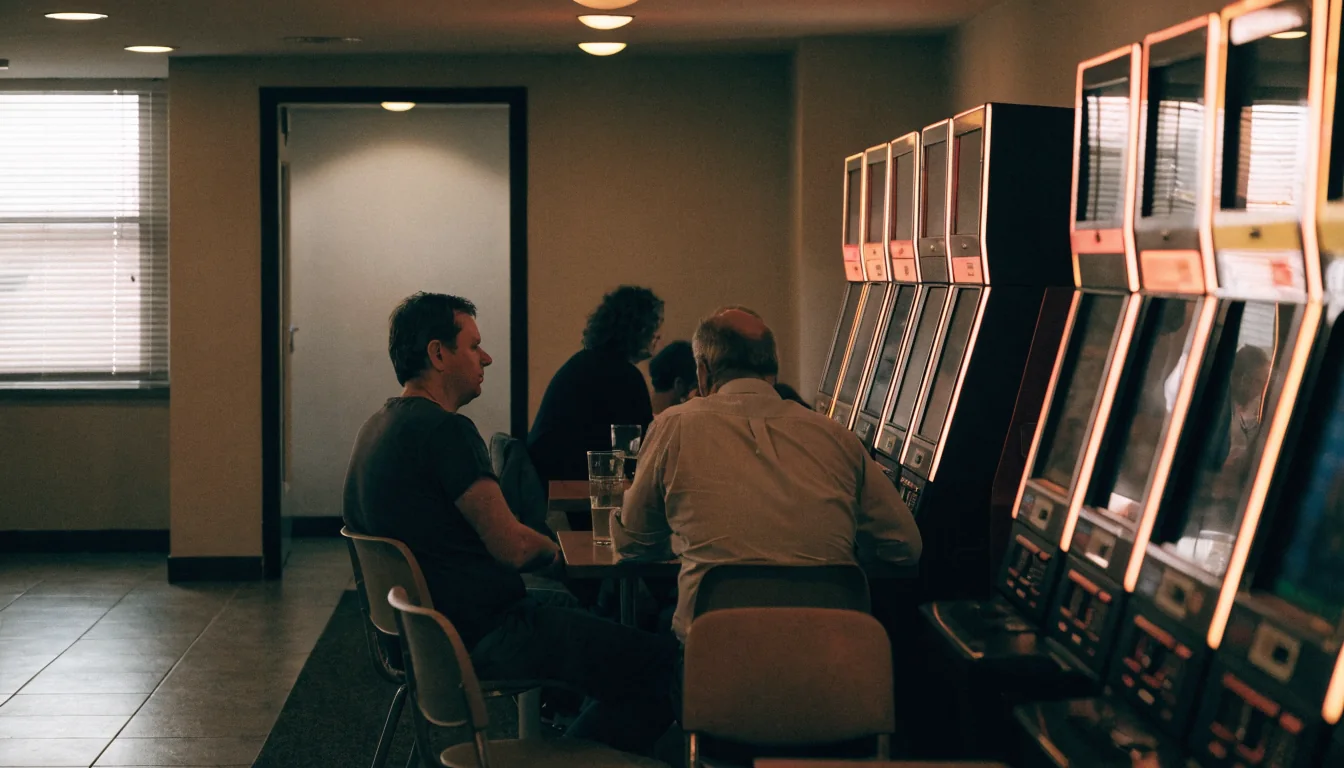
In Australia, pokies is the local word for slot machines. It is not merely a charming abbreviation. The term belongs to a particular social landscape: hotel rooms, clubs, casino floors and the familiar electronic cabinets that became part of Australian gambling culture. Add “progressive jackpot” and the image becomes more dramatic, but not more legally portable.
That distinction matters when discussing progressive jackpot pokies in Australia. The same game language can describe a machine in a land-based venue, a product listed by an overseas website, or a search result dressed in Australian colours. Those are different things. Branding is not jurisdiction.
Where the game can legally exist
For Australians, legal gambling channels include land-based casinos, licensed bookies and lotteries. A progressive jackpot pokie may therefore belong to the first category when it is offered on a physical casino floor. Its presence there says something about the venue and its permissions, not about the legality of an online copy carrying the same title.
Licensed bookies occupy a different lane. Their authorisation concerns wagering products, not a general permission to offer online casino games. Lotteries form another regulated channel, with their own structure and rules. Treating all three as interchangeable because money changes hands in each would be a neat shortcut, and a false one.

The practical boundary is easy to blur because gambling vocabulary travels better than regulation. A cabinet can be called a pokie; a website can use the same word; an advertisement can add “Australia” and an A$ price. None of those details establishes that an online progressive jackpot game is authorised for Australian customers.
What “pokies” tells — and what it does not
The word still has useful meaning. It signals Australian usage rather than a generic technical label such as “slot machine”. It also places the discussion closer to the venues and habits in which these games are recognised locally. But terminology cannot turn a prohibited online service into a permitted one.
Information about a pokie may describe its rules, stake range, Return to Player information where displayed, variance or volatility descriptions where provided, feature conditions and stated limits. These details help explain the product being presented. They do not settle whether the channel offering it is lawful.
That separation is especially important for lists labelled “best progressive jackpot pokies”. A list may be describing machines encountered in a physical casino, or software promoted by a foreign site. Without identifying the channel, the phrase quietly encourages readers to treat availability as approval. The machine has acquired a passport by typography.
Land-based reforms, carefully described
A profile review discussing Australian venues identifies carded play and restricted hours as reforms being discussed for land-based gambling settings. That is a description of a policy conversation, not an established rule for every venue or every state. Australia regulates gambling through several layers, so a single national-sounding claim can conceal the local detail that matters.
The result is a market with a conspicuous missing half. Australians may encounter progressive jackpot pokies as physical casino products, while the online presentation of casino pokies raises a separate legal question. The vocabulary remains continuous; the permissions do not. A local word, a local currency symbol and an Australian-facing webpage can make the divide look smaller than it is. It is not.
How Progressive Jackpot Slot Machines Keep the Drama on the Reels
A progressive jackpot slot machine is built from familiar parts, although modern design has given those parts rather theatrical jobs. Digital reels carry symbols; paylines or ways-to-win determine which arrangements count; a visible jackpot meter supplies the distant promise. The machine may look busy, but its grammar remains surprisingly compact.
The reel is the stage. Symbols are the cast.
Traditional layouts ask whether matching symbols land across selected paylines. Other designs use ways-to-win mechanics, where adjacent matching symbols can form combinations across the reels without relying on a single marked line. The distinction matters because it changes what the screen invites the eye to follow: a route across the middle, or a spreading pattern that seems to gather momentum.
The symbols themselves are rarely equal. A wild symbol can substitute for others, subject to the game’s rules. A scatter symbol may trigger a feature without needing to sit on a conventional payline. These small differences create the visual grammar of the spin: some icons complete a pattern, some open a door, and some merely decorate the room with suspicious confidence.
Progressive jackpot games add another layer to this architecture. The jackpot is displayed as part of the interface, often separated from the ordinary win information by its size and prominence. It is not simply another symbol printed on a reel. It is a prize feature attached to the game’s wider system, with its own stated conditions. The meter creates suspense because it is visible between spins, while the reels continue their ordinary work.
Modern pokies rarely leave the reels to perform alone. Common features include bonus mini-games, bonus spins, multipliers and cascading reels. A cascade removes winning symbols and lets new symbols fall into the vacant positions, turning one settled result into a sequence of visible changes. A multiplier alters the value attached to a qualifying win. A bonus mini-game may replace the regular reel view with selections, movements or another short sequence governed by the rules.

Megaways mechanics push the same appetite for motion further. The number of symbols appearing on a reel can vary, changing the available ways to win from one spin to another. That variation makes the display feel less like a fixed grid and more like a machine continually rearranging its own furniture.
The drama, then, is not created by the jackpot alone. It comes from delayed resolution. A scatter appears; a wild joins it; symbols tumble; a multiplier waits above the reels. Each event gives the next animation a reason to exist. The player is shown a chain of possibilities rather than a single blunt result. Small theatre, indeed.
Yet the spectacle has boundaries. Information about a pokie may state the rules, stake range, RTP where displayed, variance or volatility description where provided, feature conditions and stated limits. Those details belong beside the animation, not beneath it. A glowing meter cannot explain which symbols qualify, and a cascade cannot replace the paytable.
The RNG operates independently of time, player traffic and external factors. The screen may build suspense through sound, movement and staged transitions; it does not make the underlying selection responsive to the mood of the room. The theatre is carefully arranged. The next scene is not listening.
Progressive Jackpot Games and the Problem of “Largest”
The word “largest” has a peculiar effect on gambling language. It sounds like a measurement, yet it often functions as theatre: a bright figure on a meter, a headline designed to make an ordinary game appear historically important. In progressive jackpot games, the distinction matters. A record prize may describe something that happened, not something that is about to happen.
A progressive jackpot slot game can be understood as an entertainment product with two layers. The reels provide the immediate activity: symbols appear, features may trigger, and ordinary wins are settled. The jackpot meter provides the long drama, accumulating according to the game’s rules while players continue to spin. Those layers are visible together, but they do not turn each other into a promise.
The specific name of the slot software.
The company that built the game, such as Microgaming.
The entity that audited the RNG, such as eCOGRA.
The platform displaying and providing access to the game.
A record is not a forecast
Names such as Mega Moolah and Atlantis Ascended can appear in discussions of progressive jackpots because they belong to the recognisable culture of large jackpot games. That does not make either title a universal winner, nor does it establish a permanent champion. The label “largest progressive slot jackpot” depends on what is being measured: a particular prize, a particular network, a particular period, or a promotional claim.
The number itself also invites a common mistake. A large displayed jackpot is treated as evidence that a payout is becoming more likely. It is not. The Random Number Generator operates independently of time, player traffic and external factors. A spin does not become more favourable because the meter has been watched for a long time, because the room is busy, or because the previous player left without winning.
That is the less cinematic truth. The machine has no memory.
Each spin is independent, and the previous result has no bearing on the next result. A progressive meter may change the possible prize attached to a qualifying outcome, but it does not create a queue of disappointed spins waiting to be rewarded. “Due” is a human interpretation, not a property of the RNG.
Entertainment with uneven tempo
The appeal of these games lies partly in that tension between repetition and possibility. A player sees the same basic action performed again and again, while the jackpot amount gives each session a sense of an unfolding event. Yet the underlying entertainment can be shaped by variance. High-variance pokies pay less often but in larger amounts; low-variance pokies pay more often but in smaller amounts.

That difference changes the emotional rhythm of a game. A high-variance title may feel quiet for long stretches before a substantial result appears. A lower-variance title may produce more frequent returns without making a major jackpot any more predictable. Neither pattern converts a past result into information about the next spin.
RTP is equally easy to misread. It is a long-run statistical average calculated across tens of millions of spins, not a guaranteed return for an individual session. A progressive jackpot’s headline figure therefore cannot be combined with RTP as if the two were a personal financial estimate. One describes a statistical framework over an enormous number of outcomes; the other is a prize display attached to a game’s qualifying mechanics.
This is why rankings built around the biggest advertised prize should be treated as descriptions of scale, not advice about what will happen next. The entertainment is real enough. The prediction is not.
Microgaming, Online Slots and the Provider Question
A progressive jackpot is often discussed as though it were a self-contained creature: a bright meter, a dramatic title, a promise that grows while nobody is looking. Behind it sits a less theatrical arrangement. A software provider builds the game, a testing organisation examines specified technical elements, and the platform presents the result through its own interface. The important question is therefore not only what appears on the reels, but who supplied the machinery and who checked it.
Microgaming remains a familiar name in conversations about progressive jackpot software. Searches for Microgaming progressive jackpot slots often point towards the company’s historical association with networked jackpot games and online casino software. That association should not be confused with a guarantee attached to every game carrying a similar label. A provider name identifies a source of software; it does not, by itself, establish fairness, legality, suitability or a particular return.
The same caution applies across progressive jackpot casino slots. Titles may be distributed through operators, aggregators or technology partners, while the visible casino brand may have no role in developing the underlying game. Branding is the shop window. The provider is closer to the factory.
What independent testing can and cannot show
Independent testing gives the software question a separate layer of accountability. The listed providers’ games are independently tested by organisations such as eCOGRA and iTech Labs. Such testing is not decorative language for a footer. It is intended to examine technical performance against stated requirements, including the operation of random outcomes and the relationship between the game’s programmed behaviour and its declared parameters.
That distinction matters because a test report is not a prediction. It cannot identify which spin will produce a jackpot, make a high-variance game feel steady, or turn a progressive meter into an investment signal. It addresses whether the system behaves as specified under the scope of the assessment. The emotional economy remains untouched. A certified machine can still produce long stretches without a notable win. Mathematics has no duty to provide a satisfying narrative.
For online pokies, the central mechanism is the Random Number Generator. Each spin is independent and random, and the previous result does not become evidence about the next one. Licensed Australian-facing platforms are required to use independently audited RNGs. That requirement concerns the integrity of the outcome process, not a promise that a particular provider, jackpot network or casino will produce a desired result.
Reading the provider layer
A useful inspection separates four names that marketing tends to compress into one:
- the game title;
- the software provider, such as Microgaming or another listed supplier;
- the testing organisation, such as eCOGRA or iTech Labs;
- the operator displaying the game.
These roles are not interchangeable. A testing organisation does not create the slot. A provider does not automatically become the operator. An operator’s presentation does not prove that it developed the software. When those distinctions disappear, the word “verified” begins doing far too much work.
For progressive jackpot slots online, the provider layer is therefore a matter of provenance rather than glamour. It helps explain where the game came from and which technical assurances may exist. It does not settle the separate question of whether the service may legally be offered to Australian customers. Software can travel easily. Regulation does not.
Reading a Progressive Slot Jackpot Without Falling for the Meter
A progressive jackpot slot displays a number designed to attract attention. It rises, flashes, and acquires the social authority of a scoreboard. None of that makes the next spin more likely to win it. The useful reading begins by separating the meter from the mathematics.
Essential Checklist
- Verify the stated RTP for the game
- Identify the variance level (high or low)
- Confirm the applicable stake range
- Treat each spin as an independent event
RTP Is a Long-Run Measure
Return to Player (RTP) is a statistical average calculated across tens of millions of spins. It describes the theoretical proportion returned over that very long sample, not the result of an individual session.
That distinction matters. A game with a stated RTP does not owe a particular player a matching return, and the jackpot meter does not repair that uncertainty. A short sequence can produce no meaningful resemblance to the published figure. RTP is a population-level estimate, not a promise written into each spin.
It is also not the same as a win rate. A slot may return value through occasional large prizes rather than frequent small ones. The percentage alone cannot explain how the game feels or how unevenly its results arrive.
Variance Describes the Shape of Waiting
Variance supplies the missing part of the vocabulary.
- High-variance pokies pay less often, but their wins can be larger.
- Low-variance pokies pay more often, but their wins tend to be smaller.
For a progressive slot jackpot, the headline prize can make a high-variance structure appear more glamorous than it is. The meter is visible; the long stretches without a substantial win are not. A low-variance game may produce more regular returns without offering the same dramatic ceiling. Neither description is a quality verdict. It is a description of distribution.
That is why “biggest” and “best” are poor substitutes for analysis. The jackpot is one possible outcome, not a summary of the entire pay structure.
Stake Range Changes the Scale, Not the Odds
Online pokie bets may range from a few cents to hundreds of dollars per spin. The permitted stake range therefore changes the financial scale of a session, but it does not turn the progressive slot jackpot into a forecastable event.
A larger stake can make wins and losses larger in monetary terms. It does not make a previous miss count toward a future hit. A small stake does not create a debt the game must repay either. The meter records accumulation in the prize pool; it does not record player entitlement.
The Four Questions Worth Keeping
Before treating a displayed jackpot as meaningful evidence, the compact checklist is:
- What RTP is stated, and is it being mistaken for a session result?
- Is the variance high or low, and what does that imply about payment frequency?
- What stake range applies to the game?
- Is each spin being treated as independent, rather than as part of a sequence that must “turn”?
The meter is theatre. The terms are the useful part.
Progressive Jackpot Slots for Real Money: The Cost Is in the Conditions
“Real money” changes the question from what a game displays to what a balance can absorb. Stakes for online pokies may run from a few cents to hundreds of dollars per spin. That range is not a promise of suitability; it is a reminder that the same jackpot mechanic can sit beside very different financial exposure.
Promotional arithmetic deserves its own small cage. A profile gambling review describes a 100% bonus capped at A$2,000: receiving the full match requires a A$1,000 deposit. The headline looks generous because the headline has been trained for that job. The deposit is the entrance fee to the maximum, not a gift detached from spending.
A bonus also carries conditions that can matter more than its displayed amount:
- wagering requirements may apply before withdrawals are permitted;
- bonus funds may impose a maximum stake while they remain active;
- unused or unfinished promotions may expire;
- the qualifying deposit, game contribution and eligible balance may all be defined separately.
These are not progressive-jackpot mechanics. They are commercial terms attached to an account, and confusing the two makes the meter appear more important than the contract beneath it.
For Australian readers, the financial conditions must also be kept separate from legality. Real-money online casino games and online pokies offered to Australians are prohibited interactive gambling services under the Interactive Gambling Act. A bonus calculation therefore cannot turn an offshore promotion into an authorised local option. Nor can a displayed A$ balance, a familiar Australian tone or an available webpage supply that missing permission.
The practical cost is consequently twofold: the stake selected for each spin and the conditions attached to any promotional balance. One is visible on the button. The other waits in the terms.
Progressive Jackpot Slots Online: What the Screen Cannot Prove
A website can display progressive jackpot slots online while proving very little about whether the service may legally accept an Australian customer. The screen is designed to show availability, not jurisdiction. An Australian flag, A$ prices, familiar spelling, or local promotional language may make a page feel domestic. None of those details creates an Australian casino licence.
The same distinction applies to a website that loads without obstruction. Technical access is not legal permission. A provider may be visible from Australia even when the Interactive Gambling Act 2001 prohibits companies from offering the relevant online gambling service to people in Australia without authorisation. The page opens; the legal conclusion does not.
This is where ordinary digital reassurance becomes misleading. Branding can imitate locality. Currency can be selected from a menu. Terms can mention Australian customers. Such signals describe the website’s presentation, not the authority behind its offer. They cannot establish that progressive jackpot play is authorised for Australians.
RNG language requires the same restraint. Licensed Australian-facing platforms are required to use independently audited Random Number Generators. That is a testing and fairness safeguard where a lawful platform exists; it is not a shortcut around the separate question of whether the product may be offered at all. An independently audited system does not turn a prohibited service into a permitted one. Mathematics is not a visa.
Verification therefore has two separate stages: first, establish whether the service is legally permitted for the Australian market; only then examine technical claims such as RNG auditing or displayed game information. Reversing that order lets a polished interface do the work of a regulator. Screens are persuasive. They are not evidence of permission.
Progressive Jackpot Casinos: A Name Is Not a Licence
The phrase “progressive jackpot casinos” sounds like a category of entertainment. In Australia, it is also a legal trap. A website may present itself as a casino, display a growing jackpot meter and use Australian currency without having any permission to provide online casino games to Australians.
Under the Interactive Gambling Act, real-money online casinos offering pokies to people in Australia are banned. That prohibition concerns the service being offered, not the glamour of its branding. A progressive jackpot does not become lawful because it is attached to a familiar game title, polished software or an international payment page.
Foreign licensing creates a second source of confusion. An offshore operator may hold a licence issued in another jurisdiction, but that licence does not authorise the operator to serve Australian customers. It may describe the operator’s position elsewhere; it does not create an Australian casino licence by implication. Regulatory language is less decorative than casino advertising. That is the point.
For this reason, a foreign licence cannot be presented as proof that an online progressive jackpot casino is a legal option in Australia. Nor can a localised website, A$ pricing or Australian wording establish that permission. A name is not a licence.
The legal alternatives sit in different channels. Australians can use land-based casinos, licensed bookies and lotteries, subject to the rules applying to each product and venue. Those categories should not be quietly merged with prohibited online casino services simply because all of them use gambling language.
A careful description therefore separates three ideas: what a game advertises, where an operator is licensed, and whether that operator may lawfully offer the product to Australians. Promotional copy prefers one blurred picture. The law requires three separate questions. And the jackpot meter, for all its theatrical confidence, answers none of them.
Published by the Betting Insider Australia team.